

The Promise of Justice Amid Corruption: 15th Shaban and the Return of Imam Mahdi
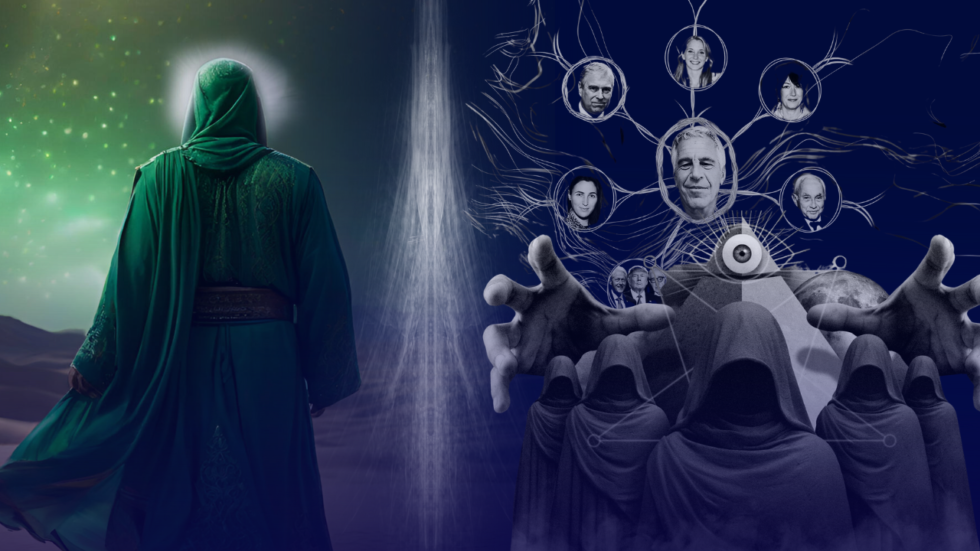
The Promise of Justice: 15th Sha’ban and the Return of Imam Mahdi In a world where global elites manipulate politics, wage wars, and exploit economies with impunity, the 15th of Sha’ban, the eighth month of the Islamic calendar, serves as a stark reminder of the leadership humanity truly deserves. This day marks the birthday of Imam Mahdi, the 12th Shi’a Imam, who is believed to return alongside Prophet Isa (Jesus) to uproot tyranny and restore justice in a world dominated by oppression and exploitation. Millions of Muslims observe it not merely as a celebration, but as a call to reflect on the moral responsibilities of power and the enduring hope that entrenched injustice will ultimately be challenged and overcome. The Significance of 15th Sha’ban The 15th of Sha’ban is more than a religious observance; it is a moment to reflect on humanity’s trajectory. Across cultures and religions, the idea of a promised savior reflects a universal concern: the need to confront injustice and corruption, and the belief that power must be accountable to higher moral standards. In a world dominated by self-serving elites, the anticipation of Imam Mahdi embodies the enduring hope for leadership guided by justice, integrity, and service to society. God’s Purpose and the Prophetic Mission God’s ultimate purpose for humanity is moral and spiritual perfection, achieved through liberation from all forms of inner and outer evil. To guide this journey, He appointed messengers to establish a divine social order grounded in justice and freedom. From the earliest stages of human history, the pursuit of justice has been humanity’s most persistent demand and the defining mission of the prophets. As the Qur’an states clearly: “So that mankind may uphold justice” (Qur’an, 57:25). In this framework, leadership belongs solely to those appointed by God. The responsibility of establishing justice cannot be entrusted to individuals driven by self-interest or corruption, but only to God-centered leaders whose authority is grounded in moral integrity rather than power. Each prophet arose within a specific historical context to confront oppression, challenge tyrannical rulers, and establish a social order guided by divine law. Figures such as Moses, Jesus, and Muhammad worked to dismantle systems of exploitation, all sharing a single purpose: ensuring that authority serves humanity in reaching perfection rather than subjugating it. From Prophetic Justice to Modern Tyranny This historical pattern highlights the stark contrast between divine leadership and modern power structures. While messengers sought to align societies with justice, freedom, and moral responsibility, history has too often concentrated power in the hands of elites who exploit the weak and evade accountability. Today, scandals such as the Epstein files expose how the world’s most powerful individuals operate beyond consequences, influencing political decisions, economic systems, and even wars, actively perpetuating global suffering. Where divine leadership is defined by responsibility to God and service to humanity, power divorced from moral accountability turns authority into a tool for exploitation and oppression, enriching a few at the expense of the many. In the modern world, oppression and injustice have intensified, driven by corrupt networks and individuals at the highest echelons of political power, reaching unprecedented scale and efficiency. Despite competing ideologies, from communism to Western liberal democracy, societies today struggle with war, poverty, hunger, and widespread moral decay. The Epstein files are far from isolated scandals; they expose a broader reality: systems that claim to uphold freedom and human rights while shielding the powerful and abandoning the vulnerable. The Divine Promise of Justice Against this backdrop, the Mahdist movement represents a promise of justice. Prophet Muhammad describes Imam Mahdi as a figure from his own lineage who will “fill the earth with justice and equity as it has been filled with tyranny and injustice.” His leadership aims for the comprehensive restoration of justice at all levels; social, political, economic, and moral, across the world. This expectation is not unique to Islam. Across traditions, believers anticipate a savior who restores balance: Christianity speaks of the Second Coming of Christ, Judaism anticipates the Mashiach. Despite theological differences, these traditions converge on a single principle: oppression is never the final state of human affairs. Belief in a savior functions as more than doctrine; it is a moral and psychological force that challenges resignation, nurtures resistance, and sustains activism. The Present Challenge In today’s world, humanity faces the dominance of oppressive powers with no moral or geographical limits. Confronting the unjust world order today requires a global struggle between the front of falsehood—imperialistic powers—and the front of truth, which seeks to eradicate oppression. The promised savior will establish a rule of justice that transcends borders. The ultimate success of this divine mission depends on collective awareness. Throughout history, prophets and their successors often failed to establish justice on a global scale because people did not recognize tyranny or support the messenger. Today, those awaiting the return of Imam Mahdi share this responsibility: to identify oppressive powers, raise awareness, and support the cause of truth. Only through collective insight and action can the forces of oppression be challenged, paving the way for the establishment of justice under divine guidance.


If you value our journalism…
TMJ News is committed to remaining an independent, reader-funded news platform. A small donation from our valuable readers like you keeps us running so that we can keep our reporting open to all! We’ve launched a fundraising campaign to raise the $10,000 we need to meet our publishing costs this year, and it’d mean the world to us if you’d make a monthly or one-time donation to help. If you value what we publish and agree that our world needs alternative voices like ours in the media, please give what you can today.
Author

Related

Inside the Zionist Strategy of Advancing a “New Middle East” for a “Greater Israel”
The Man Who Haunts the West: Who Is Ayatollah Khamenei?