

Jesus and Mary: A Shared Sacred Ground Between Islam and Christianity
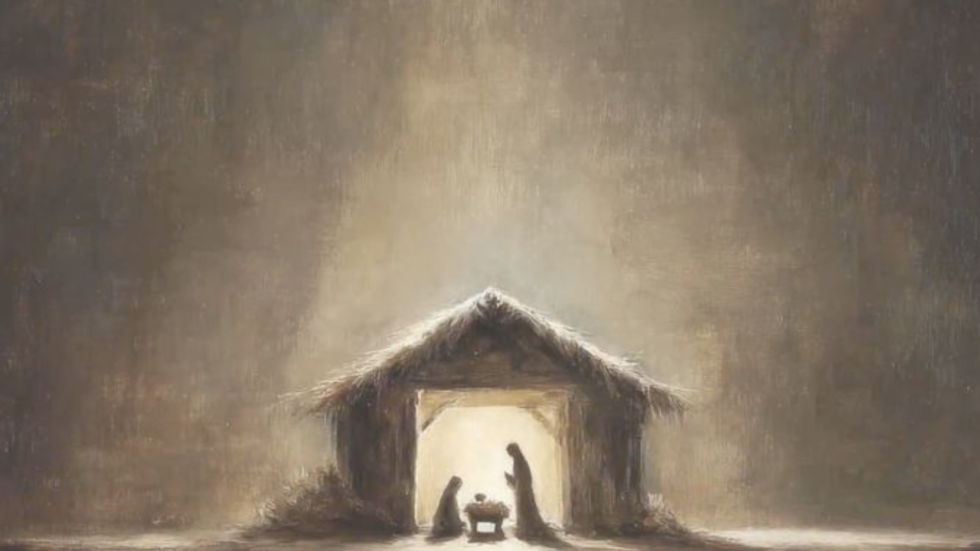


As Christians around the world mark Christmas and reflect on the birth of Jesus, it is worth remembering that this sacred story is not cherished by Christians alone. In Islam, Jesus and his mother Mary are figures of deep reverence, purity, and divine purpose. At a moment centered on peace, humility, and hope, these shared beliefs offer a meaningful reminder of the spiritual ground Muslims and Christians hold in common.
Islam and Christianity share deep spiritual foundations, particularly in their reverence for Jesus and his mother Mary. These shared beliefs offer a powerful basis for interfaith understanding, especially at a time when religious divisions are frequently emphasized by corrupt powers seeking to keep societies divided and subjugated.
In Islam, belief in Jesus (ʿĪsā) is not optional but essential, and Muslims are required as a matter of faith to respect and revere him. The Qur’an presents Jesus as a holy, sinless figure, honored in both this world and the hereafter. Far from dismissing him, Islam places Jesus among the most revered messengers of God:
“When the angels said, ‘O Mary, Allah gives you the good news of a Word from Him whose name is Messiah, Jesus son of Mary, distinguished in the world and the Hereafter and one of those brought near [to Allah].” – Qur’an, [3:45]
Likewise, the Holy Qur’an honors Mary (Maryam) with an entire chapter bearing her name, presenting her as chosen, purified, and exalted above all women, a depiction that resonates strongly with Christian devotion to her moral and spiritual purity:
“And when the angels said, ‘O Mary, Allah has chosen you and purified you, and He has chosen you above the world’s women.” Qur’an, [3:42]
Both religions affirm the miraculous virgin birth of Jesus. The Qur’anic narrative describes Mary conceiving Jesus without a father by divine command, presenting his birth as a “sign” and a “mercy” from God to humanity (Qur’an, 19:16–26). This shared belief stands as one of the clearest points of theological convergence between Muslims and Christians.
Islam also attributes to Jesus a range of miracles familiar from the New Testament. According to the Qur’an, Jesus healed the blind and the leper, raised the dead, and performed extraordinary acts, all by God’s permission (Qur’an, 3:49). In a uniquely Qur’anic narrative, Jesus even speaks from the cradle, proclaiming his servitude to God and his prophetic mission, underscoring themes of humility and divine purpose familiar to both traditions:
“Thereat she pointed to him. They said, ‘How can we speak to one who is yet a baby in the cradle?’ He said, ‘Indeed I am a servant of Allah! He has given me the Book and made me a prophet.” Qur’an [19:29-30]
Where Islam and Christianity diverge is not in reverence for Jesus, but in interpretation. The Qur’an consistently refers to him as “Jesus, son of Mary,” emphasizing his human origin while rejecting claims of divinity. At the same time, it affirms his title as the Messiah (al-Masīḥ), acknowledging him as the long-awaited figure sent to the Children of Israel, though understood as a messenger of God rather than God incarnate (Qur’an, 4:171).
Islamic tradition envisions a hopeful and just future for humanity with the reappearance of Imam Mahdi, a righteous leader from the progeny of the Prophet Muhammad. He will restore justice in a world weighed down by oppression and corruption. At this time, Jesus is believed to return, not as a new prophet or rival, but as a unifying figure who prays behind Imam Mahdi, embodying humility, submission to God, and the continuity of divine guidance. This vision emphasizes timeless principles that resonate across faiths: the pursuit of justice, the call to serve others, and the triumph of truth and righteousness over injustice and oppression.
The shared reverence for Jesus and Mary, the acknowledgment of his miraculous birth and moral authority, and converging visions of justice and guidance point to profound spiritual common ground between Islam and Christianity. In a world where religious differences are often used as tools of manipulation to divide communities, these shared beliefs offer a powerful basis for dialogue, understanding, and cooperation. By focusing on what unites rather than separates, believers of different faiths can cultivate mutual respect, celebrate shared values, and work together toward a more just and compassionate world.
If you value our journalism…
TMJ News is committed to remaining an independent, reader-funded news platform. A small donation from our valuable readers like you keeps us running so that we can keep our reporting open to all! We’ve launched a fundraising campaign to raise the $10,000 we need to meet our publishing costs this year, and it’d mean the world to us if you’d make a monthly or one-time donation to help. If you value what we publish and agree that our world needs alternative voices like ours in the media, please give what you can today.
Author

Related
5 Facts about the Holy Month of Ramadhan
Companies affiliated with Israel continue to face losses following a global boycott campaign in response to Israel’s ongoing onslaught in Gaza.
The Promise of Justice Amid Corruption: 15th Shaban and the Return of Imam Mahdi
In a world where global elites manipulate politics, wage wars, and exploit economies with impunity, the 15th of Sha’ban, the eighth month of the Islamic calendar, serves as a stark reminder of the leadership humanity truly deserves.

Lady Fatima: A Timeless Model of Excellence
History has known extraordinary women, but only one embodies a perfection that extends across every…