

Quds Day: A Struggle that Continues to Shape the Region
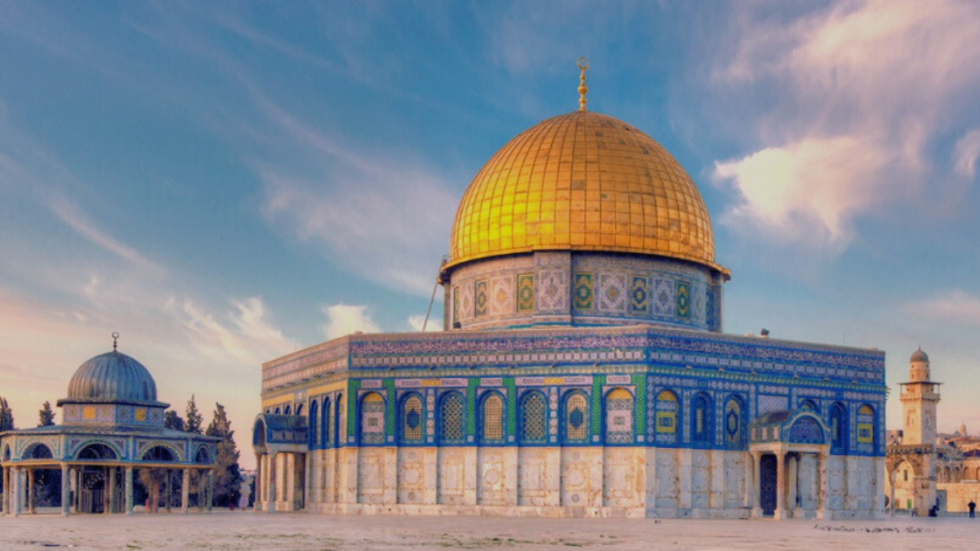


Nearly half a century after its founding, Al Quds Day arrives at a time when Jerusalem and the wider region once again stand at the center of war. Established on August 7, 1979 by Iran’s first Supreme Leader Ayatollah Ruhollah Khomeini, Quds Day designated the last Friday of every Ramadan as a global day of demonstrations in solidarity with Palestinians and opposition to Israeli control of Jerusalem. As Israel continues to wage war across Iran, Lebanon, and Palestine, the history of Quds Day reminds us that these struggles have been intertwined for almost 50 years.
When a new Israeli raid began on the south of Lebanon on Ramadan 13, 1399/August 7, 1979, Ayatollah Khomeini gave a speech in which he announced that the last Friday of the month of Ramadan would be known as “al-Quds Day.” In the speech, Khomeini declared the liberation of Jerusalem a religious duty for Muslims. Revered as Islam’s third holiest site after the sacred cities of Mecca and Medina, Al-Aqsa was the first qibla, the direction toward which Muslims initially turned during prayer. Khomeini pointed in particular to Israeli bombardments of Palestinian homes in southern Lebanon, which he argued were designed to crush the Palestinian struggle.
In this context, Quds Day was not merely conceived as a symbolic gesture toward Palestine. From the outset, it linked the fate of Jerusalem to the wider regional confrontation unfolding in Lebanon and beyond, creating a space for international solidarity against regional aggressors.
Traditionally, Iran has commemorated the day with mass demonstrations, public rallies and parades. Iranian leaders have historically given fiery speeches condemning Israel and America, while in Lebanon, Hezbollah has organized military parades during the last week of each Ramadan.
Over the decades, Quds Day has spread far beyond West Asia, being observed across South Asia, Europe and North America. This year, however, it holds particular significance as Iran, Lebanon, and Palestine collectively face ongoing attacks by Israel.
At the same time, international demonstrations face newfound resistance. In the UK, the Quds Day march – held annually for 40 years – has been banned, marking the first time the UK government has prohibited a protest since 2012. The ban itself reveals the power of the solidarity behind it, and how deeply this cause resonates with millions around the world.
Developments in Jerusalem have taken a historic turn. For the first time in its history, Al-Aqsa Mosque stood empty for several days during Ramadan after Israeli authorities blocked all worshippers from entering the compound.
For decades, Israeli political and religious movements have openly called for the construction of the “Third Temple” atop the Al-Aqsa compound. Members of Prime Minister Benjamin Netanyahu’s government continue to violently attack the complex and push for its destruction to realise this vision. Israel’s National Security Minister Itamar Ben-Gvir has carried out several provocative incursions into the compound, signaling growing disregard for its status, while equally raising fears about its future.
Finance Minister Bezalel Smotrich comes from a movement that regards the entire compound as rightfully Jewish and views its current status as a temporary injustice waiting to be reversed. Meanwhile Israeli settlers have repeatedly stormed the site during Jewish holidays, desecrating the sanctity and stability of one of Islam’s holiest places. The attempted erasure of Al-Aqsa’s historic and religious significance is a testament to the ongoing Palestinian struggle to preserve its identity, sovereignty, and memory.
Almost 50 years after its founding, Quds Day continues to illustrate a central reality: the fate of Jerusalem cannot be separated from the wider struggles unfolding across the region. As Al-Aqsa stands empty during Ramadan and war rages on from Palestine to Lebanon and Iran, the recent attacks across the region have only reinforced the message at the heart of Quds day – that these struggles are deeply connected, and that the call for solidarity with Jerusalem remains as urgent today as it was 47 years ago.
If you value our journalism…
TMJ News is committed to remaining an independent, reader-funded news platform. A small donation from our valuable readers like you keeps us running so that we can keep our reporting open to all! We’ve launched a fundraising campaign to raise the $10,000 we need to meet our publishing costs this year, and it’d mean the world to us if you’d make a monthly or one-time donation to help. If you value what we publish and agree that our world needs alternative voices like ours in the media, please give what you can today.
Author

Related
Sanctions, Soft War, and Sabotage: The Real Story Behind Iran’s Protests
Every time Iran faces economic pressure, the same script reappears: sanctions strangle the people, media reframes chaos as ‘protest,’ and foreign intelligence moves in the shadows. This is not unrest. It is a soft war.
Gaza 2.0: Trump’s Blueprint for Turning Gaza into a Laboratory of U.S. Power
"We're going to take over the Gaza Strip... and turn it into the Riviera of…
How Washington’s Shadow Looms over Lebanon and Syria’s Fragile Future
The heads of Lebanon and Syria have aligned themselves with the world’s biggest sponsor of…