

The Costs of Washington’s Imperial Gamble in Iran
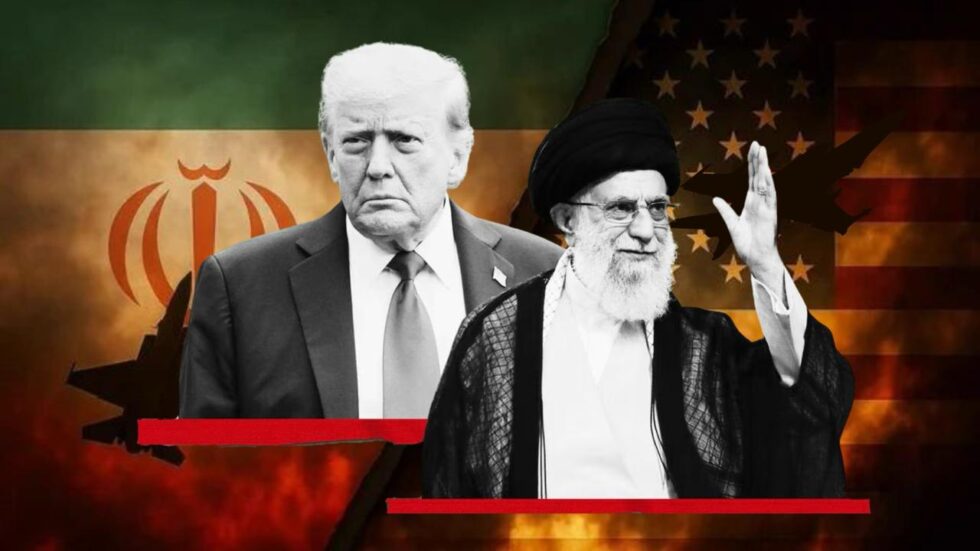


The assassination of Iran’s Supreme Leader, Ayatollah Sayyid Ali Khamenei, was framed as a decisive step towards the dubious goal of “regime change.” However, decapitation is not the same as collapse. With overstretched ambitions, no credible opposition figure capable of assuming power, and uncertainty over Iran’s political posture in a post-Khamenei era, the move carries more risk than reward for the U.S.-Israeli alliance.
What was intended as a strategic breakthrough increasingly looks like a reckless gamble. As the war drags on, Iran has expanded the battlefield beyond its borders, striking regional targets with global consequences. Washington’s reliance on shock-and-awe theatrics has pushed it into unfamiliar terrain, where the line between short-term tactical gains and long-term strategic miscalculation grows dangerously thin.
Lessons from the past
Iran has historically engaged in wars of restraint: symbolic victories paired with measured retaliations. For Washington and its regional allies, this bred a sense of complacency, creating the false assumption that Iran would indefinitely act in a measured way, absorbing pressure without fundamentally altering its posture.
However, recent years have hardened attitudes considerably. The 12-day war waged on Iran under the promise of negotiations, the continued genocide in Gaza despite a supposed ceasefire, the illegal abduction of Venezuelan President Nicolas Maduro, and most recently, the assassination of their top leader, collectively signalled that the U.S. seeks to test the limits of its adventurism within the international system.
In yet another war launched amid the call for negotiations, U.S.-Israeli strikes have effectively erased previous red lines; no target remains untouchable. Iran responded swiftly, striking dozens of American assets across the Gulf, including in Kuwait, UAE, and Bahrain – home to the ASRY facility that provides logistic support to the U.S. navy, was also hit.
Successive waves targeted oil tankers, naval vessels, and the British RAF Akrotiri military base in Cyprus. Panic continues to flood Israeli streets as sirens sound across the capital, sending settlers scrambling to their shelters. Iran’s response has been unprecedented, attacking 60 strategic targets and 500 U.S. and Israeli military sites in just the first three days of war alone.
Iran’s ability to withstand U.S. pressure carries massive consequences for the entire region, and it has sought to make this reality known materially. American bases once perceived as shields for Gulf monarchies have turned into liabilities. Striking these bases acts as a firm message to the hosts of U.S. empire in the region: there is no separation between American targets and the soil that shelters them.
“To the countries of the region: we are not seeking to attack you. But when the bases in your country are used against us, and when the U.S. carries out operations in the region relying on these forces, then we will target those bases. These bases are not part of your land, rather they are American soil.” – Ali Larijani X statement.
Iran is no longer operating within the rigid framework of previously declared red lines, proving that the assassination has injected new intensity into its response. As Washington continues to test the limits of Iranian patience, Tehran recalibrates its doctrine away from strategic patience and towards a posture of broader, sustained escalation.
The repercussions are already global. QatarEnergy halted its LNG production which accounts for nearly 20 percent of the global supply, causing gas prices to soar in Asia and Europe – the latter by almost 50 percent. Soon after, Iran closed the Strait of Hormuz through which one-fifth of the world’s oil and gas trade flows, posing a risk to global maritime trade and energy markets.
Iran has demonstrated its gravely underestimated ability to impose a global chokehold on the international system in a matter of days. Its objective is clear: to force U.S. allies in the region to either reconsider their role as harborers of U.S. interests, or accept that hosting American bases renders them strategic targets.
Strategic success of major miscalculation?
U.S. wartime logic is rather simple and historically repetitive. In the imperialist’s mind, the removal of leadership is assumed to bring a permanent end to popular movements, as though such revolutions are sustained solely by a single leader or ruling class, rather than by institutional depth and popular conviction.
The Western world cannot conceive that genuine popular support exists for authorities which openly reject the West’s self-proclaimed status as bastions of democracy and peace. This is especially true for the Islamic Republic. Millions of people rallied behind the flag as Mossad-led riots raged through their cities in late December, and again in early March as the nation mourned the immense loss of its leader. Overnight, Iran had become a nation unified in grief.
The Trump administration operates on the logic of spectacle, where short-term shock-and-awe tactics override carefully structured, long-term strategic planning. Its entire military doctrine assumes that symbolic blows – in this case, the elimination of senior leadership – are sufficient enough to fracture state cohesion. Yet, behind this thin veil of strength lies a glaring lack of sustainable strategy.
Trump over-promised and will inevitably underdeliver. As with Venezuela, the rhetoric of regime change was curated without a popular opposition figure capable of commanding widespread support, or an understanding of the complexities of government mechanisms which prepare states to withstand U.S. pressure and prevent internal turmoil. In such cases, complete collapse becomes highly unlikely.
Iran is a constitutional Republic with codified emergency mechanisms, including an interim council which assumes leadership until a new Supreme Leader is announced. The U.S. administration assumed that manufacturing a power vacuum would produce immediate chaos and a collapse in morale.
Such an assumption underestimates the Islamic Republic’s popular support, institutional resilience, and the depth of its government framework. For regime change to succeed through a power vacuum, anti-Republic factions must be sufficiently organized to seize control. Iran’s swift internal stabilization suggests otherwise. The U.S. largely overestimated these factions and underestimated Iran’s political cohesion.
On a spiritual level, martyrdom does not extinguish causes – it revitalizes them. It consolidates national unity around shared narratives. For a majority Shia population, the retelling of Karbala where Imam Hussain refused to kneel to tyranny resonates deeply. The assassination of Ayatollah Khamenei is interpreted within this framework, transforming historical memory into contemporary reality. In seeking to decapitate leadership, the U.S.-Israeli offensive has breathed new life into history, immortalizing the late leader while reigniting anti-imperial resolve.
On a tangible level, the assassination creates the opportunity for hardliners to assume power, potentially shifting Iran away from its longstanding posture of strategic patience. Ayatollah Khamenei stood as the primary obstacle to building the atomic bomb as a deterrent to Israel’s persistent threats and nuclear arsenal, through a fatwa which banned its production.
With every instance of U.S. adventurism, Iranian patience erodes and the previously forbidden becomes reconsidered. Popular support for nuclear development had already grown following the 12-day war, and the assassination may accelerate this trajectory. In a rash decision to weaken Iran, Washington may have opened the doors to a more hardened and less restrained adversary, leaving it more vulnerable than ever before.
An empire living in illusion
Washington continues to operate as though it inhabits an era of uncontested dominance. Yet, mounting evidence points to deep structural weaknesses within its military apparatus, which affect its capacity for sustained, large-scale warfare. A 2023 CSIS report warned that U.S. stockpiles of weapons, ammunition, and critical systems are severely depleted, while domestic production capacity remains insufficient. In any prolonged conflict, American reserves would likely be exhausted faster than they could be replenished.
Recent years have only exacerbated the strain. From war in Ukraine to Gaza, Washington continues to steadily over-extend its capacity. The 12-day war on Iran alone impacted 25 percent of Patriot missiles and THAAD’s, exposing U.S. supply chain vulnerabilities.
This issue has repeated itself. In less than a week, Iran’s strikes on U.S. assets have caused at least $2 billion in losses, while air-defense interceptors are rapidly depleting. The situation has become so severe that Washington has reportedly considered relocating its air defense systems from South Korea to West Asia. At the same time, requests from Gulf allies to replenish their air defenses were reportedly brushed aside – a stark reminder that the protection these states expect in return for compliance is far from guaranteed. Meanwhile, Washington and Tel Aviv have begun lobbying Kurdish forces to join the war effort. Each step reflects a policy increasingly driven by desperation.
In contrast to Washington’s chaotic and theatrical approach, Iran has pursued a war of attrition, marked by calibrated, intentional targeting. Air defenses are worn down with cheap drones before striking with advanced missiles. Yet Iran is not solely banking on depletion. Billion-dollar radar detection systems have been targeted, effectively weakening the communication between them and allowing Iran to prepare for a protracted war. The problem was illustrated by Marco Rubio, who explained that while Iran can produce over 100 missiles a month, the U.S. can only build 6 or 7 interceptors in the same timeframe, highlighting the growing challenge that American and Gulf defense systems face.
A defensive operation was transformed into strategic leverage. While Iran seems prepared for a ‘long war,’ analysts continue to warn that U.S. stockpiles could be depleted within days of sustained engagement.
Despite its immense resource expenditure, Washington has struggled to secure decisive victories. Russia and China remain strong, while regime change in Iran appears no more achievable than it was in Venezuela. These objectives may have been realized at a time of unchallenged hegemony where cinematic operations alone could destabilize states, but this era has largely passed.
As the U.S. stretches itself thin across multiple arenas, the gap between ambition and achievability widens. War with Iran is unlikely to produce decisive outcomes. Instead, it risks accelerating the erosion of American strategic leverage in the region.
A wider war of regional sovereignty
Attempting to weaken Iran through targeting the broader axis has been central to the U.S.-Israeli strategy for decades. Each theater of aggression in Gaza, Syria, Lebanon, and Venezuela, has formed part of a sustained effort to erode Iran’s regional standing and reshape West Asia in accordance with their vision. Syria’s collapse granted Israel strategic depth and leverage; the kidnapping of Venezuela’s president was designed to secure an alternative oil lifeline in the event of regional supply disruption in a larger confrontation with Iran.
Iran is not fighting a war of survival – regime change was never a realistic outcome for a country with Iran’s level of institutional strength and popular support. In reality, it is engaged in a decolonial war for regional sovereignty, challenging the U.S.-Israeli blueprint for a ‘New Middle East’ and ‘Greater Israel’ project. By extension, it confronts the Arab governments which uphold Washington’s imperial architecture in the region, as well as the settler colonial entity itself.
Arab states now face a defining choice: compliance with U.S. imperialism or a reassertion of regional sovereignty. American bases across the Gulf are not neutral facilities; they are living remnants of a colonial security framework. By striking bases used in operations against it, Iran has signalled that host nations cannot separate their national interests from Washington’s military agenda. Bases on their soil are no longer immune from consequence.
Big gamble, little gains
Ayatollah Khamenei was not merely a state official. For Shias, he held the highest religious authority, and was a spiritual guide for millions around the globe. For the Global South, he was seen as a pillar of anti-imperial resistance, linking liberation struggles in West Asia, Latin America, and Africa into one collective cause.
His influence cannot be measured solely through diplomatic rhetoric or geopolitical analysis; it carried spiritual, ideological and symbolic weight. This explains why his assassination triggered mass mobilizations beyond Iran itself. From Iraq to Bahrain and Pakistan, millions rallied in mourning and protest.
Washington started this war on the gamble that Iran’s response would be weak and unable to control the battlefield. Yet, Iran has demonstrated that it is far from a paper tiger, retaining the ability to apply sustained pressure, and to cause an international standstill when it deems necessary. In one move, Washington may have jeopardized the very status quo it ardently seeks to protect. Resources are stretched, supply chains are strained, and regime change remains implausible. What was framed as a decisive action may ultimately be remembered as a strategic overreach.
If you value our journalism…
TMJ News is committed to remaining an independent, reader-funded news platform. A small donation from our valuable readers like you keeps us running so that we can keep our reporting open to all! We’ve launched a fundraising campaign to raise the $10,000 we need to meet our publishing costs this year, and it’d mean the world to us if you’d make a monthly or one-time donation to help. If you value what we publish and agree that our world needs alternative voices like ours in the media, please give what you can today.
Author

Related

The Bane of Empire: Sayyed Hassan Nasrallah’s Legacy Endures
September 27, 2026, marks two years since Israel unleashed over 80 tons of bunker-buster bombs…

Trump’s 600 Days of Broken Promises
At the Republican midterm convention in Dallas on September 10th, President Donald Trump offered voters…

Eight Decades of Occupation: Kashmir’s People Still Deprived of Freedom
Just days ago, India and Pakistan marked 79 years since independence: Pakistan on 14 August…