

When Resistance Became State Doctrine: How Iran Forged a Global Resistance Front
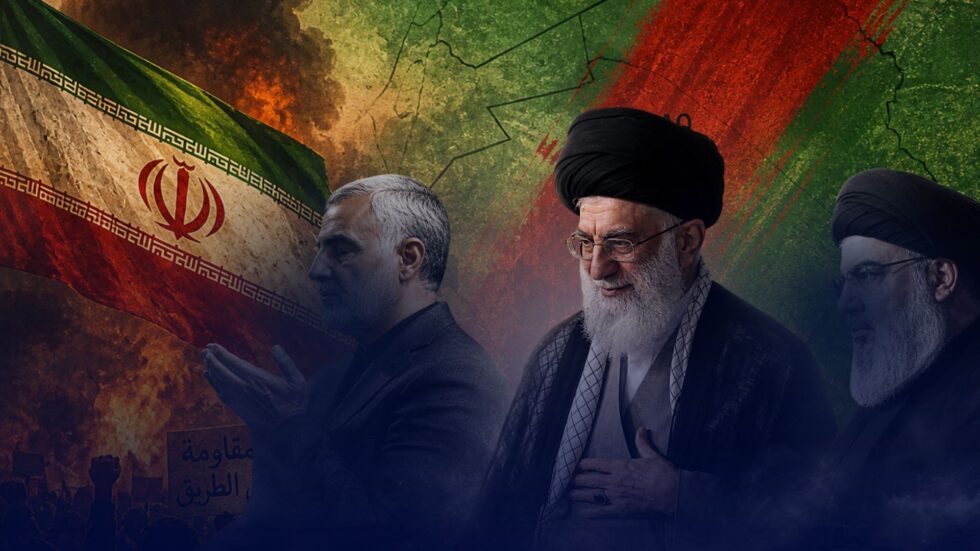


Washington’s war against Iran has widened across the region. The assassination of Ayatollah Ali Khamenei has triggered a massive regional response, displaying the existence of a fortified and united anti-imperial resistance front. This support for Iran worldwide, across both oppressed lands and even those protesting their governments in the West, can be understood both through the lens of collective deterrence, and an allyship that connects people through a shared goal, experience, or ideology.
Global reactions to the assassination of Ayatollah Khamenei conveys an important point. Iran’s history of resistance has given it a leadership role in the anti-imperial movement worldwide. This deep collective allyship can be understood through examining the impact of the Islamic revolution on resistance movements, as well as the current international mobilization supporting Iran and commemorating the loss of the powerful leader beyond Iran.
To understand Iran’s impact on anti-imperial resistance, one must turn back to its root: the 1979 Islamic Revolution. More than a domestic political transformation, it marked the revival of the Islamic principle of resisting oppression through action, and laid the foundations for what would become an engine for transnational resistance.
Reviving the Spirit of Islamic Justice
In Islam, government and power pivots around an administration of justice. A true Islamic government is one that is a means for administering justice and for rejecting oppression. This is a principle emphasized repeatedly in the Quran. Iran is the only nation in the world that has “support for the oppressed” as an official article within the constitution. In Article 3, the Islamic Republic of Iran is to develop its foreign policy in line with supporting the oppressed around the world. The official article states:
“the organization of the nation’s foreign policy based on Islamic criteria, fraternal commitment to all Muslims, and unrestrained support for the impoverished people of the world.”
Article 154 of the constitution also states:
“The Islamic Republic of Iran considers human happiness throughout human society as its ideal. It considers independence, freedom, and the governance of justice and truth as the right of all the people of the world. Consequently, while it completely abstains from any kind of intervention in the internal affairs of other nations, it supports the struggles of the oppressed for their rights against the oppressors anywhere in the world.”
The Islamic Revolution made the fight against oppression, not just in name but in practice, a deeply ingrained part of the nation’s doctrine, to the extent that it became a religious obligation. This principle made clear that the Revolution was never meant to have an inward focus. Rather, its responsibilities were understood to extend beyond borders to support all those that seek freedom. Crucially, a careful distinction was maintained: supporting global movements did not mean dictating the course of the resistance, but simply providing the means to confront the oppressive force on their own terms.
An example of this would be Iran’s continuous material support of Palestine without controlling its use. During the Karin A Incident in 2002, a vessel transporting Iranian-supplied weapons destined for Palestinian factions was intercepted in the Red Sea. Some analyses contend that this shipment was not an isolated occurrence, but rather reflective of a broader pattern of support extended to multiple Palestinian groups, including both Hamas and Fatah.
Importantly, such support has been characterized as facilitating the broader principle of armed resistance, with recipient groups retaining autonomy over its implementation. This framing challenges interpretations that reduce the relationship to a conventional proxy dynamic. Given that the incident took place more than two decades ago, it invites further inquiry into how such forms of support may have evolved over time, both prior to and following this event. This discussion is often situated in relation to United Nations General Assembly Resolution 3246, which addresses the legitimacy of struggles against colonial and foreign domination.
Palestinian Liberation as a Primary Objective
Support for Palestine was never a peripheral issue for the Islamic Revolution, but rather a primary obligation. One of the earliest tenants of the Islamic revolution was supporting their resistance against Zionist occupation, with Imam Khomeini’s first imprisonment by the Shah dictatorship being due to a speech of his denouncing the Shah’s pursuit in normalizing with the Zionist regime.
Ayatollah Khamenei himself emphasized the plight of the Palestinian people being the most significant issue in the world today. He also encouraged the masses to look beyond the imperialist plot of sectarianism, that it does not matter that Iran is a Shia majority country while Palestine is Sunni majority – support is based on supporting all oppressed people, regardless of sect or religious orientation.
This principle is found in Iran’s denouncement of South African apartheid as well as their support for the Bosnian people. Nelson Mandela when meeting Ayatollah Khamenei refers to him as “My Leader.” This had nothing to do with religion, but rather the collective struggle and fight against tyranny.
A Global Anti-Imperial Movement
This same theme is shown in Southern Lebanon with the resistance against Zionist occupation. The Lebanese people saw the tenants of the Islamic Revolution and were uplifted and inspired to build a sustainable resistance network leading to the eventual end of Zionist occupation in South Lebanon in 2000, their continued victory in 2006 and even today, where they have successfully pushed back invading IOF forces from Lebanese territory on multiple occasions.
The Yemeni resistance was also inspired by these principles of the Islamic revolution. In Latin America, the fight against U.S. imperialism drew inspiration from Iran, specifically in Venezuela.
Venezuela’s confrontation with U.S. imperialism is actively shaped by Iran’s resistance, which provided both a model and a partner in practice. The 2020 dispatch of Iran’s largest flotilla of fuel tankers to Venezuela was a deliberate challenge to U.S. sanctions, demonstrating that such restrictions could be openly circumvented through strategic alliances.
Here, Venezuela engaged in a form of resistance modeled on Iran’s long-standing sanction-evasion strategies, using cooperation to undermine U.S. economic coercion. This reveals that Venezuela’s anti-imperialist stance is influenced directly by Iran’s precedent of transforming sanctions from instruments of isolation into opportunities for alternative networks of collaboration and resistance.
Iran has also stated its support for the liberation of African Americans in the United States. Ayatollah Khamenei referred to Malcolm X as a martyr and spoke of his stature and significance. He also spoke about the nature of the United States’s racism against African Americans during the 2020 protests against George Floyd’s killing.
During the war today, we see this continued display of a united resistance front, the foundation of this front’s ideals being the revolutionary ideas spearheaded by Iran. The U.S. is quick to refer to all these nations as “Iranian Proxies,” however, through examining the history of Iran’s impact on the anti-imperial movement, one sees that it is an alliance built on goal and common struggle.
Lebanon re-entering the war after Ayatollah Khamenei’s assassination is based on this common moral stance, not on Iran “funding a proxy.” The same can be said about the other aspects of the resistance axis from Yemen to Iraq to Palestine. The entire region rising up during this war to denounce American imperialism, Zionism, and the Epstein class pushing war is based on this collective deterrence and common struggle in combating the common enemy. The images and messages displayed on Iranian missiles raining down in the Zionist occupied areas symbolize this allyship across all oppressed and free people of the world who are resisting American-Zionist tyranny.
Iranian missiles have not only displayed images of those in the region who have been martyred but even Americans who have been brutally murdered by the U.S. and Israel. For example, Rachel Corrie, a U.S. citizen who was crushed to death by an Israeli Bulldozer in 2003, was honored in one of the missiles. Aaron Bushnell, a U.S. Air Force member who set himself on fire in protest against the genocide in Palestine was also honored. Alex Pretty and Renee Nicole Good, American citizens brutally murdered by ICE in January this year, were also honored.
When Martyrdom Transcends Borders
The assassination of Ayatollah Khamenei which has elevated the late leader into a martyr, proves the wider impact of the Islamic Republic on anti-imperial resistance worldwide. The entire region from Palestine to Lebanon, Iraq, and Pakistan, rose up in protest against this assassination of an individual widely respected as not only a spiritual figurehead, but a leader who uplifted all oppressed peoples.
In Karachi, Pakistan, At least a dozen were killed protesting outside the US embassy, further showing how this act ignited the entire region collectively. In the United States, various groups also honored Ayatollah Khamenei, pointing to his support of African Americans, his letter to American university students protesting for Palestine and his support for those in Latin America.
During Al Quds Day, Americans from different ethnicities and backgrounds honored Ayatollah Khamenei’s role in supporting Palestine and the downtrodden across the world. Speeches from activists, both Muslim and non-Muslim spoke of his character and dedication to fighting tyranny worldwide. Charlotte Kates, Samidoun International Coordinator, states that Ayatollah Khamenei’s analysis and approach has led to the strengthening of allied resistance forces that are confronting imperialism and Zionism in the region.
Spinning a Shared Thread of Resistance
The Islamic Revolution’s impact of anti-imperial resistance worldwide is multilayered and far-reaching, ranging from moral motivation to material support.
Its role in spearheading an anti-imperial movement globally has made military and political calculations increasingly complicated for the Western powers. They are not merely fighting a single nation, but rather an ideology that transcends borders and hemispheres, weakening the impact of soft war strategies.
Iran’s historic record suggests that its support has not been dependent on dictating how liberation should be achieved, but in supporting others to develop the means to pursue it in their vision. This contributes to its appeal: the consistency with which it has supported other nations while allowing them to define their own path.
Resistance movements do not need to share the Islamic Republic’s religious foundations to recognize its significance. The results of the Revolution speak for themselves: it remains the only state to have materially challenged U.S. imperial power while enduring more than four decades of sanctions and pressure. This fact alone is enough to inspire others to study, respect, and adopt important aspects of its model of resistance.
If you value our journalism…
TMJ News is committed to remaining an independent, reader-funded news platform. A small donation from our valuable readers like you keeps us running so that we can keep our reporting open to all! We’ve launched a fundraising campaign to raise the $10,000 we need to meet our publishing costs this year, and it’d mean the world to us if you’d make a monthly or one-time donation to help. If you value what we publish and agree that our world needs alternative voices like ours in the media, please give what you can today.
Author
Related
Eight Decades of Occupation: Kashmir’s People Still Deprived of Freedom
Just days ago, India and Pakistan marked 79 years since independence: Pakistan on 14 August…

Can the Arab Speak?
A 40-year old Taxi driver in Egypt drives all day and night to make ends…
The United States Used a Precision Missile in Lamerd, Iran, and Killed 21 Civilians within Seconds
The events that unfolded in the Iranian city of Lamerd on February 28, 2026, stand as a stark example of how the debut of a new weapon system can leave lasting scars on a community long after the explosions have faded.