
Can the Arab Speak?
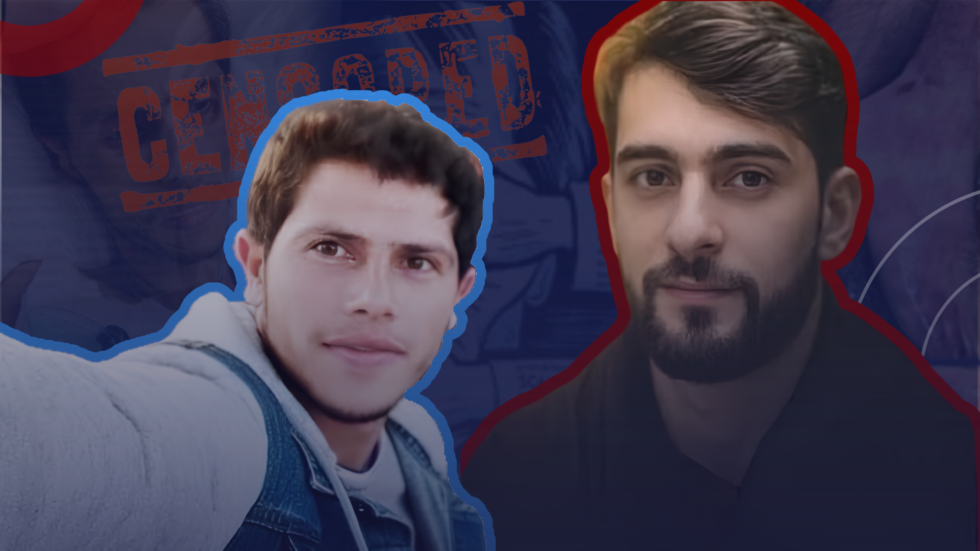


A 40-year old Taxi driver in Egypt drives all day and night to make ends meet. In his mind, he knows that across an artificial land border, a genocide is waging on next door. He is aware that trucks full of aid are waiting to enter Gaza. After a day of long work, he buys baladi bread. Conversations about hunger in Gaza are omnipresent in the local bakery – just as they are with his passengers and with his family. At night, he opens Facebook and is immediately overwhelmed with photos and videos of dead Palestinian men, women and children. He posts a short comment that honors Palestinian martyrs. The next day, he finds that his post was removed for violating Meta’s guidelines.
The word shaheed, which translates to martyr or witness, previously accounted for more content removals on Meta’s platforms than any other word.
In Gaytri Spivak’s seminal piece, “Can the Subaltern Speak,” she argues that the most marginalized and oppressed groups cannot speak, be heard, or represent themselves within the Western frameworks and power structures that moderate the exchange of knowledge.
A foundational postcolonial text, Spivak’s insights on the politics of representation remain remarkably relevant to digital platforms. Today, speech is not only mediated by governments and institutions but also by private technology companies whose algorithms determine which voices are amplified and which are censored.
Meta Censorship
In April 2025, Drop Site News published a major investigation into what it described as the “largest mass censorship operation in modern history.” Drawing on platform data, it found that at the behest of the Israeli government, Meta systematically removes posts on Instagram and Facebook that criticize Israel or express even vague support for Palestine.
According to Drop Site, the most targeted users were from Arab and Muslim-majority nations, with the top 12 countries affected being: Egypt (21.1%), Jordan (16.6%), Palestine (15.6%), Algeria (8.2%), Yemen (7.5%), Tunisia (3.3%), Morocco (2.9%), Saudi Arabia (2.7%), Lebanon (2.6%), Iraq (2.6%), Syria (2%), Turkey (1.5%).
Drop Site shows that Meta has complied with 94% of takedown requests (TDRs) issued by Israel since October 7, 2023. The findings indicate that Israel is the largest originator of takedown requests globally, leading to the removal of over 90,000 posts, within an average of 30 seconds.
Meta has also expanded automated takedowns since October 7, resulting in an estimated 38.8 million additional posts being automatically removed, banned or suppressed across Facebook and Instagram since late 2023.
Placing these figures in a broader historical context highlights the increase in Israel-related content moderation over the past decade. According to figures first disclosed by Israel’s Justice Ministry, Facebook complied with approximately 95% of Israeli takedown requests in 2016. At the time, Israeli officials reported submitting around 158 such requests over a limited period that year.
Nine years later, the scale and automation of content moderation has expanded significantly, with Meta automatically suppressing millions of posts in line with Israeli interests.
2016 was a major year for Israel’s relationship with Facebook. Jordana Cutler joined the company as the Director of Public Policy for Israel at Meta. Formerly a senior adviser to Israeli Prime Minister Benjamin Netanyahu, she has served as a liaison between Meta and Israeli institutions, government bodies, and Jewish organizations for the past decade.
In 2024, reporting by The Intercept alleged that she repeatedly flagged multiple posts by groups such as Students for Justice in Palestine under Meta’s “Dangerous Organizations and Individuals” policy. That same year, Meta also publicly updated its hate-speech approach to attacks on “Zionists,” as Meta’s hate speech policy can ambiguously treat it as a proxy for “Jews” or “Israelis.”
Recently, an investigation by The Intercept revealed that Israel also asked Meta to censor content about the war on Iran.
Censorship from Arab Regimes
Across the Arab world, criticism of Israel is increasingly censored and surveilled. Users in the three countries most frequently affected by Meta’s moderation actions, Egypt, Jordan and Palestine, are also likely to face imprisonment for criticizing Israel.
In Egypt, the regime has restricted any public expressions of dissent. According to the Egyptian Initiative for Personal Rights (EIPR), the regime referred 64 people to trial in two State Security cases in 2025. The first case involves 14 defendants, including a child, who were arrested in October 2023 after attempting to demonstrate for Gaza. The government resuscitated a 1914 British colonial law to charge defendants with participation in an unauthorized assembly. The protestors have remained in detention for over two years.
The second case concerns a group of individuals arrested for messages within private group chat on social media. This group was organizing to collect donations for relief efforts in Gaza. Among them is Ahmed Bahgat Ezzat, a software developer whom prosecutors have labeled a fugitive, despite his family’s claims that he was forcibly disappeared after being detained by plainclothes security officers in May 2024. He has not been heard from since. EIPR notes that these prosecutions are part of a broader pattern, with at least 19 State Security cases involving over 130 defendants accused of supporting Palestine, including children and elderly.
In another country neighboring Palestine, Jordan has similarly imprisoned its citizens for pro-Palestinian activity on social media. In March 2026, Jordanian engineer Daham Al-Amoush died on hunger strike in prison due to his social media posts in support of Gaza and his criticism of the Jordanian government. His case brought renewed attention to other Jordanian detainees imprisoned for supporting Gaza, including fellow engineers Muhammed Saleh and Ayman Ajjawi.
In occupied Palestine and the West Bank, social media activity has been grounds for imprisonment and torture by Israeli authorities for years. In 2015, 470 Palestinians were arrested for “incitement” due to their Facebook posts. After October 2023, social media censorship took on a new form with the Israeli Defense Forces conducting overnight raids in the West Bank to arrest Palestinians for social media activity.
In February 2026, Israeli police arrested two Palestinian men on suspicion of online incitement during separate arrests in the West Bank. During the raids, the IDF put up leaflets near the homes of both suspects, warning residents that Israeli intelligence agents surveil Palestinian social media activity. The leaflet reads: “Even during the month of Ramadan, Israeli intelligence forces monitor what you do on the internet. You have been warned.”
Various Arab regimes have also sought to suppress expressions of opposition to the US-Israeli war on Iran, including Bahrain. In light of its longstanding record of repression against its majority Shia population, Bahraini authorities in March this year contacted the parents of Mohammed Abdul-Mohsen al-Mousawi to ask whether they had received their son’s body. Nine days earlier, Mohammed’s family had lost contact with him after he was detained by authorities. Upon receiving his body, his family reported finding visible signs of torture.
Al-Mousawi’s death came amid a broader crackdown by the Bahraini regime against citizens who peacefully protested or used social media to express their views on the US-Israeli war on Iran. Authorities, however, accused al-Mousawi of espionage, a claim his family and rights groups have rejected.
Why Speaking Matters
This year, as Shias around the world commemorated the tragedy of Ashura against the backdrop of US-Israeli aggression on Iran and Israel’s continued genocide and ethnic cleansing campaigns in Lebanon and Palestine, Ali Shariati’s words on the horizon of the Iranian Revolution ring on. In his address to the Iranian masses, he said that “For every revolution, there are two visages: blood and message. One has to choose either the blood or the message, to be either Husayn or Zainab.”
Sayeda Zainab was the sister of Husayn bin Ali, the grandson of the Prophet Muhammad who was martyred on the day of Ashura for refusing to bow down to an unjust tyrant. In the aftermath of his death, Zainab carried on the message of her brother’s death in the courtroom of the Umayyad Caliph.
Returning to Gayatri Spivak’s question – “Can the Subaltern Speak?” scholar Noor Zaidi says that within the episode of Karbala, the most marginalized and dispossessed figures, especially women, were able to speak. The figure of Sayeda Zainab, who witnessed a masscare, maintained the memory of the prophet’s family as she was taken captive and imprisoned within the dungeons of Damascus.
Speaking in and of itself challenges power structures by denoting presence; presence in the very spaces where there have been sustained efforts to eradicate it. Zainab stood precisely where Yazid intended silence. Having witnessed the murder of her brother, Imam Husain, his companions, and her family members for refusing to acquiesce to injustice, she could have yielded to the chilling effect of that violence. Instead, she spoke in the courtroom of Damascus, asserting a presence that Yazid’s violence had sought to extinguish.
Today, there is a grand irony in the fact that the most censored word is shaheed. This erasure takes on two forms of silencing. Without the speaker carrying on the memory of the one killed as a witness to injustice, the lives of those killed disappear into the void of history.
The Arab is dehumanized within mainstream media and silenced by their own regimes. What remains at stake here is the inability of entire populations to narrate their experiences on the most accessible platforms.
Free speech forms both the identity of the speaker and those who receive it. Consequently, the denial of speech is not merely the suppression of expression but the suppression of identity itself. For the Arab world, whose cultural identity is deeply bound to the eloquence of Arabic language and its literary tradition, this denial constitutes a form of dispossession that strikes at the very foundations of collective selfhood.
If you value our journalism…
TMJ News is committed to remaining an independent, reader-funded news platform. A small donation from our valuable readers like you keeps us running so that we can keep our reporting open to all! We’ve launched a fundraising campaign to raise the $10,000 we need to meet our publishing costs this year, and it’d mean the world to us if you’d make a monthly or one-time donation to help. If you value what we publish and agree that our world needs alternative voices like ours in the media, please give what you can today.
Author

Related

The Bane of Empire: Sayyed Hassan Nasrallah’s Legacy Endures
September 27, 2026, marks two years since Israel unleashed over 80 tons of bunker-buster bombs…
Trump’s 600 Days of Broken Promises
At the Republican midterm convention in Dallas on September 10th, President Donald Trump offered voters…
Eight Decades of Occupation: Kashmir’s People Still Deprived of Freedom
Just days ago, India and Pakistan marked 79 years since independence: Pakistan on 14 August…