
10 Questions Karbala Still Asks Every Generation
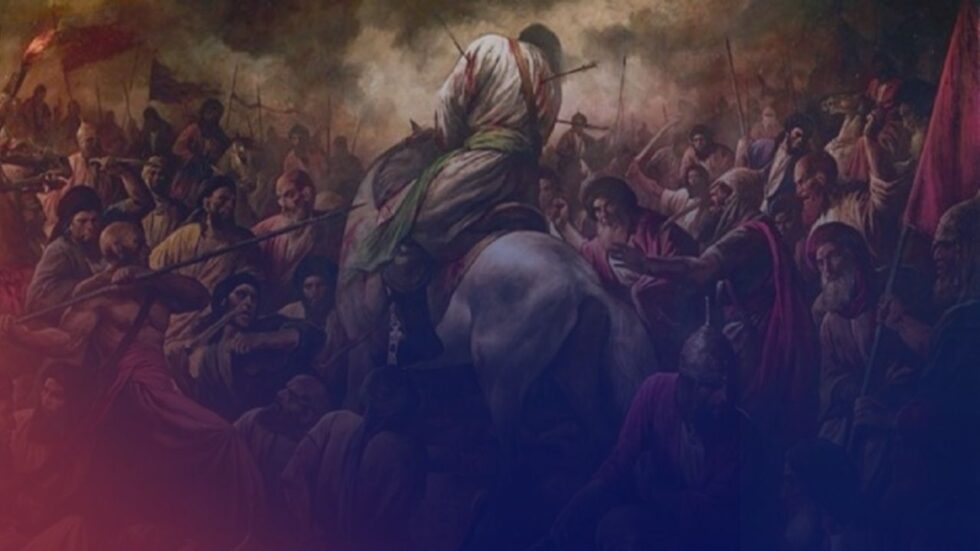


Karbala refers to the battle fought in 680 CE in present-day Iraq, where Imam Husayn, the grandson of the Prophet Muhammad, was killed after refusing to pledge allegiance to Yazid, the Umayyad ruler whose illegitimate reign was marked by injustice and corruption. For Shia Muslims, the event is not remembered simply as a historical tragedy. It has come to represent a moral struggle against tyranny, silence, and the normalization of oppression.
Karbala is remembered annually through mourning gatherings known as majalis, where Imam Husayn’s suffering is recited and commemorated. However, Karbala is not only about grief. It has also functioned as a standard by which many judge courage, loyalty, and moral responsibility. For that reason, it continues to raise a question that is not limited to the past: what does it cost to stand for truth when power demands compliance?
The questions are not abstract. They are rooted in real figures and real moments from Karbala: Abbas ibn Ali at the Euphrates, Qasim ibn Hasan facing death as a teenager, Habib ibn Mazahir answering Husayn’s call as an elderly companion, the change of heart of the Umayyad commander Hurr on the morning of Ashura, the thirsty children in the camp, Imam Husayn standing almost alone, and Zainab carrying the story after the slaughter. Karbala still asks these questions because the moral significance of the event has never been exhausted.
1. What have you learned to call normal?
The event of Karbala took place in 680 CE, when Imam Husayn, the grandson of the Prophet Muhammad, was surrounded in the desert after refusing to pledge allegiance to Yazid, the Umayyad ruler in Damascus. In Shi‘i memory, the event is not considered a military defeat. Instead, it reveals how a political order can normalize corruption, obedience, and violence to the extent that the suffering of the Prophet’s family is treated as a matter of public order. The failure of Kufa was not only opposition; it was the withdrawal of support by many who had once invited him.
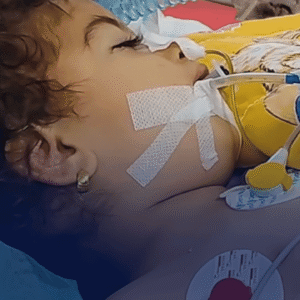
The same pattern can be seen in the present. In Gaza, for example, mass death, displacement, and starvation have often been discussed in ways that make the crisis feel administratively normal rather than morally unbearable. Political violence becomes easier to accept when suffering is framed as strategy, security, or collateral damage. The most dangerous victory of oppression is not only fear. It is familiarity. Karbala continues to ask whether conscience still knows how to be shocked.
2. Who defines your morality?
Every age has its court voices. Sometimes they are judges, scholars, and preachers. Sometimes they are states, media institutions, experts, and influencers. But the question remains the same: who shapes what each individual is taught to excuse? Who persuades each person that silence is wisdom, compromise is maturity, and obedience is morality?
Karbala shattered the illusion that legitimacy and truth are the same. The side with the army, the officials, and the public authority was not the side with justice. Imam Husayn stands in history as a warning against outsourcing conscience. Moral clarity does not always come dressed in institutional approval. Sometimes it stands thirsty, outnumbered, and accused.
3. What comforts have become your idols?
Most people often do not betray truth because they are convinced by falsehood. More often, they remain attached to the forms of life that make truth costly: family security, reputation, stability, income, social belonging, and emotional ease. Karbala does not dismiss these concerns lightly. It simply refuses to let them become idols.
Imam Husayn did not choose a path of resistance while imagining he had no responsibilities. He took his family with him. He watched Ali Akbar fall. He held Ali Asghar in his arms. He gave everything, not because he loved loss, but because truth demanded more from him than comfort could permit.
Karbala asks whether families, duties, careers, and responsibilities have become shields behind which truth and justice are avoided. Imam Husayn bore those responsibilities as well. The question is not whether responsibility matters; it is whether the comfort attached to those responsibilities has become sacred.
4. What do you refuse to sacrifice?
Closely related to comfort is sacrifice. Everyone praises sacrifice in principle. Very few accept it in practice. Karbala asks this mercilessly: what is the self actually willing to lose for truth?
Abbas ibn Ali, the half-brother of Imam Husayn and flagbearer of Karbala, gives one of its most unforgettable answers. According to the historical reports, he reached the Euphrates after days of thirst. The water is before him. His body is burning. Yet the reports of Karbala remember him refusing to drink because he remembers Husayn and the thirsty children in the camp. This is not merely a story of loyalty. It is a story of disciplined desire. Abbas teaches that sacrifice begins where the self is no longer the first object of concern.
Modern culture works against that logic. It rewards immediate gratification and teaches people to satisfy impulse quickly. Karbala asks a harder question: what has actually been denied for the sake of something higher? A truth that costs nothing usually transforms nothing.
5. Who benefits from your silence?
Silence is often described as neutrality. Karbala exposes how false that can be. Silence may spare the speaker discomfort, but it rarely spares the victim suffering. In times of moral crisis, silence does not hover above the conflict. It redistributes the burden downward, onto the already wounded.
Imam Husayn’s refusal to pledge allegiance to Yazid can also be read as a refusal to let silence be taken as endorsement. A concrete example is Ubaydullah ibn Hurr al-Ju‘fi who met Imam Husayn on the road to Karbala but refused to join him, offering his horse and sword instead of his loyalty; Husayn declined the offer because the issue was not equipment but allegiance. In that sense, Karbala suggests that oppressive systems often rely less on open enthusiasm than on the quiet that protects them.
This question remains brutal in every age. When genocide unfolds, when children are slaughtered, when prisoners disappear, and when the powerful lie while the public shrugs, silence can become a form of moral shelter for those in power. Karbala demands honesty here: sometimes silence is not peace. It is permission.
6. What truth have you postponed?
Many people are not enemies of truth. They are procrastinators before it. They know enough to act, but they tell themselves the moment is not right. History is full of people destroyed not by open denial, but by delay.
Karbala is devastating because it is full of too-late recognitions: those who knew, those who hesitated, those who misjudged the hour, and those who believed the point of no return had not yet arrived.
But moral history is often decided precisely in those moments when conscience must move before certainty becomes comfortable.
Habib ibn Mazahir offers one clear example. He was an elderly companion of Imam Husayn who answered the call to Karbala instead of treating age, distance, or caution as an excuse. In Karbala memory, his choice shows that truth does not wait for the perfect moment. Karbala continues to ask which truths are still being delayed until they no longer demand courage.
7. What kind of victory are you pursuing?
The world usually defines victory in measurable terms: survival, power, territorial success, reputation, control. Karbala redefines victory so radically that it still confuses political minds. By worldly standards, Imam Husayn was outnumbered, surrounded, deprived, and martyred. Yet history remembers him as victorious and remembers his killers as disgraced. Why? Because he refused to let success be measured by possession rather than principle.
This question becomes sharper in the story of Qasim ibn Hasan. When asked how he saw death, the tradition remembers him answering that it was “sweeter than honey.” Only a heart freed from the world’s false measurements can speak like this. Qasim is not glorifying death in the abstract. He is testifying that a death in the service of truth can be sweeter than a life purchased by surrender.
Karbala asks each person what kind of victory they are pursuing: the kind that elevates the soul, or the kind that renders it debased.
8. Can People Still Change?
Karbala teaches that people are not prisoners of their past. Truth reorders human value. Status, history, and social position are not erased, but they are relativized in the presence of loyalty. Once a person chooses the side of truth, their worth is measured by sincerity and sacrifice, not by where they started.
Hurr ibn Yazid al-Riyahi makes this point unmistakably. He was the commander sent to intercept Imam Husayn and prevent him from reaching Kufa. Yet on the morning of Ashura, he changed sides and joined Imam Husayn, and Karbala’s memory has preserved him as a symbol of repentance and return. His story shows that a person’s first allegiance does not have to become their final identity.
Karbala makes change look possible, but not cheap. Hurr does not become admirable because he once stood on the wrong side. He becomes admirable because, when truth became unavoidable, he moved toward it. That is why Karbala continues to ask whether the past can be revised by courage, or whether fear will keep the self fixed in its first mistake.
9. What has your heart stopped mourning?
Perhaps the most intimate question Karbala asks is not political but spiritual. What has one’s heart stopped mourning? A person may still function outwardly while inwardly becoming incapable of grief. And when grief dies, so does moral proportion. One no longer knows what deserves tears and what deserves disgust.
Karbala restores grief to its rightful place by showing that mourning is not emotional excess. It is evidence that the heart still recognizes violated sanctity.
The child, the thirsty, the abandoned, the faithful, and the martyred are not only themes of a distant past. They are the figures through which Karbala measures whether the heart remains alive. In Shi‘i memory, figures such as Zainab bint Ali after the slaughter and the surviving women and children of the camp preserve that moral grammar of grief. Their suffering is not only historical; it remains a standard for how the oppressed are recognized.
Mourning Husayn therefore is not something static or self-contained. If grief for Karbala does not widen the heart toward other violated innocences, then its meaning has been missed. The question is not simply whether one cries. It is whether mourning continues with moral attention.
10. If Husayn stood before you today, where would you stand?
Josh Malihabadi captured something essential about Husayn’s moral universality when he wrote:
کیا صرف مسلمان کے پیارے ہیں حسین
چرخِ نوعِ بشر کے تارے ہیں حسین
انسان کو بیدار تو ہو لینے دو
ہر قوم پکارے گی، ہمارے ہیں حسین
(Is Husayn beloved only to Muslims?
Husayn is the star of the whole human world.
Let humanity fully awaken,
and every community will cry: Husayn is ours)
The claim is not merely devotional. It suggests that once human moral consciousness is awakened, Husayn becomes recognizable beyond the boundaries of sect, community, or inherited identity.
Yet recognition in principle is not the same as standing with truth when truth becomes costly. History is not decided by admiration alone. It is decided by moral reflex: by what is loved when power is absent, by what is defended when legitimacy is denied, and by what is still recognizable when truth appears thirsty, besieged, and accused of disturbing public order.
That is why Karbala remains an open question rather than a closed memory. It does not ask where people imagine they would have stood in 61 AH as an exercise in pious romance. It asks where they are already standing now. The issue is not whether Husayn is admired in the abstract, but whether one’s loyalties still gather around the abandoned, the truthful, and the outnumbered.
In that sense, Karbala is not only a tragedy to be remembered. It is a criterion by which the present is judged. Husayn’s side is not identified by power, scale, or worldly success, but by fidelity under pressure. The final question, then, is not whether Husayn would be recognized. It is whether truth, in its most vulnerable form, would still be chosen.
The Mirror of Karbala
Every generation inherits its own idols, silences, comforts, and rationalizations. And every generation faces the temptation to keep Imam Husayn safely within ritual grief rather than moral imitation: to mourn him, revere him, and remember him, while resisting the claims he makes upon conduct in the present. That is why the figures of Karbala remain interrogative. Abbas still asks what desire can be restrained. Qasim still asks what kind of victory is being sought. Habib still asks what excuse age or distance can provide. Zainab still asks what the heart recognizes as violated sanctity. And Hurr still asks the most unsettling question of all: how long truth can be recognized without being joined.
That is why Karbala remains alive. Not because history repeats itself mechanically, but because the human soul continues to carry the same contradictions. Delay, self-deception, fear, loyalty, courage, and repentance still contend within it. And until the soul is transformed, Imam Husayn’s questions will not cease to arise.
If you value our journalism…
TMJ News is committed to remaining an independent, reader-funded news platform. A small donation from our valuable readers like you keeps us running so that we can keep our reporting open to all! We’ve launched a fundraising campaign to raise the $10,000 we need to meet our publishing costs this year, and it’d mean the world to us if you’d make a monthly or one-time donation to help. If you value what we publish and agree that our world needs alternative voices like ours in the media, please give what you can today.
Author

Related
Eight Decades of Occupation: Kashmir’s People Still Deprived of Freedom
Just days ago, India and Pakistan marked 79 years since independence: Pakistan on 14 August…
Can the Arab Speak?
A 40-year old Taxi driver in Egypt drives all day and night to make ends…