
The Fourth of July and the Architecture of Forgetting
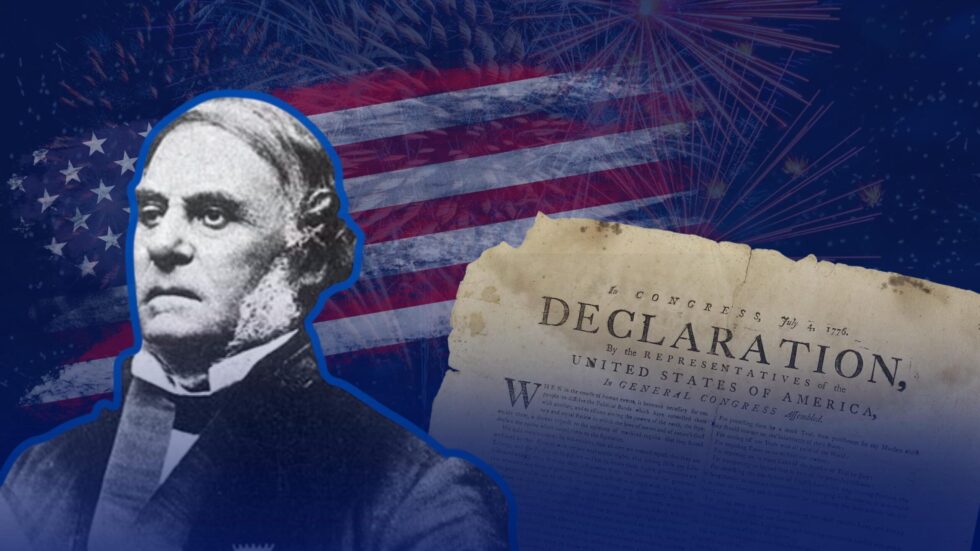


On the Fourth of July, the United States dresses its violence in color. Firecrackers split the evening. Flags rise. Families gather. Children cheer at the noise. The holiday is presented as freedom’s birthday, as if celebration itself could settle the question of what freedom has cost, who paid for it, and who was never meant to receive it.
But every nation that celebrates itself must first decide what it is willing to forget.
Because memory, if taken seriously, does not comfort. It unsettles. It refuses the neatness of slogans and the ease of patriotic ritual. It insists that the past is not past, but present – alive in institutions, in language, in land, in conscience. And that is precisely why nations learn not simply to remember, but to curate.
What is preserved is not always what is true. What is repeated is not always what is whole. And what is celebrated is often what has already been stripped of its violence.
The Fourth of July is usually taught as the birth of freedom: the day a people cast off a monarchy and declared themselves sovereign. But like the Pilgrims, the Mayflower, and the First Thanksgiving, it is part of a national mythology designed to make American power feel innocent. These stories do not merely describe the nation. They train people to love it, excuse it, and trust it. They create allegiance before reflection. They turn history into ritual and ritual into identity.
That is what origin myths do. They do not only tell a story about the past. They shape the moral imagination of the present.
To understand the truth of the Fourth of July, one has to begin before 1776, in the colonial world itself. The popular image of the early British settlers is of religious seekers and brave pioneers risking everything for a better life. But the reality was far more brutal and far less noble. Many of the people who crossed the Atlantic came as indentured servants, and the majority did not become prosperous landowners. They died in servitude, returned to England, or remained trapped as poor, landless settlers in a colonial society built on hierarchy from the beginning.
This world was not free. It was stratified.
Colonial governments were run by governors and officials appointed by the British monarchy, and colonial elites taxed, controlled, and exploited everyone beneath them: indentured servants, poor whites, Black slaves, and Native peoples. The empire in America was not simply British rule imposed from across the ocean. It was also a local class system, maintained by white elites who benefited from the labor, land, and dispossession of others. The machinery of domination was already in place long before the Declaration of Independence was signed.
By the time of that declaration, colonial society was marked by dramatic inequality. In Boston, the richest 5 percent of taxpayers controlled half of the city’s taxable assets. Similar patterns existed across the colonies. Wealth was concentrated, power was consolidated, and rebellion was never only about abstract liberty. It was also about property, land, trade, and who would control the future.
The elite who led the revolution understood this clearly. The war against Britain was not simply a popular uprising by the oppressed against tyranny. It was also a moment in which colonial elites recognized that they could channel popular anger toward their own aims. Britain’s wars, especially the French and Indian War, had left colonial elites chafing under imperial financial burdens. They saw the chance to break from Britain, secure land, protect profit, and consolidate power, while granting just enough concessions to bring ordinary settlers along.
The signers of the Declaration of Independence reflect that reality. All 56 were members of the colonial elite, and nearly 70 percent had served as colonial officials under the British monarchy. Even John Adams, one of the great moral heroes of the national story, served as defense attorney for the British soldiers who committed the Boston Massacre. That fact is not an indictment of Adams alone. It is a reminder that the revolution was authored by men deeply embedded in the system they were said to reject.
That is why the Declaration should be read less as a clean birth certificate for democracy and more as an argument among elites over who would rule.
And once that is understood, the holiday begins to look different.
Because the revolution did not transform the lives of Black people, Native people, women, or poor and landless whites in any meaningful egalitarian sense. Black people remained enslaved. Native people remained targets of removal, war, and extermination. Women remained outside political power. Poor whites remained structurally subordinated in a system where property and access were still controlled by a narrow class. The “revolution” changed the flag, but not the fundamental architecture of domination.
In that sense, the Fourth of July was less a democratic revolution than a transfer of sovereignty within a colonial order. One set of elites replaced another. The rhetoric of freedom expanded. The social reality of freedom did not.
And the deeper lesson of that transformation has echoed ever since.
A nation built on selective liberation learns early how to make injustice look natural. It learns how to celebrate freedom while leaving hierarchy untouched. It learns how to turn conquest into inheritance, slavery into exception, and dispossession into destiny. Once a people is taught to regard itself as free while living inside structures of domination, it becomes much easier to manage its conscience.
That is how the empire survives at home. Not only through force, but through formation.
It shapes what people think freedom means. It teaches citizens to see domination as normal when it is familiar, and violence as regrettable when it is distant. It produces a public that can tolerate contradiction as long as it is wrapped in patriotism. It turns conscience into something selective, something that activates only when the suffering is close enough, visible enough, or culturally acceptable enough to disturb.
This is not just a holiday, it is a ceremony of national innocence. It invites the public to feel patriotic without thinking too hard about what was done to make patriotism possible.
The fireworks are beautiful, loud, and brief. They imitate rupture. They simulate brilliance. For a moment, the country is lit up by a performance of freedom. And then the darkness returns, unchanged. The ritual offers intensity without reckoning, spectacle without accountability, belonging without honesty.
To celebrate the founding of a settler-colonial state without speaking of Indigenous dispossession is to confuse ceremony with truth. To speak of liberty without speaking of slavery is to confuse legal language with moral reality. To speak of freedom while ignoring the violence through which that state was established is to turn history into branding. Its achievement is not innocence, but narration. Not purity, but the capacity to make contradiction feel like destiny.
What the United States learned to do at home, it carried abroad: to name domination as necessity, to call war peacekeeping, to define civilian death as collateral, and to present destruction as order. Its global power was built not only through military strength, but through a worldview in which its own violence could repeatedly be framed as exceptional, defensive, or morally superior.
That worldview has had consequences across the globe, but especially in the Global South, where U.S. and allied power has often treated entire regions as reservoirs of labor, minerals, strategic terrain, and political leverage. Rich countries have drained enormous wealth from the Global South over the past several decades, turning extraction into development in the language of the powerful and immiseration in the lives of everyone else. The empire that celebrates independence at home has long relied on dependence abroad.
That is not an accident of policy. It is the logic of the system.
An empire does not only expand by planting flags. It expands by organizing the world into those who may decide and those who must adapt. At home, that logic appears as racial hierarchy, segregation, policing, and the long afterlife of white supremacy in the institutions that sort who is safe and who is disposable. Abroad, it appears as extraction, debt, sanctions, and regime change. The Global South is not simply “influenced” by this system; it is often treated as a reservoir of labor, minerals, strategic terrain, and political leverage. Rich-country extraction from the Global South has been estimated at $152 trillion over recent decades, a scale that gives the word “development” a distinctly colonial aftertaste.
The United States now maintains roughly 750 overseas base sites in 80 foreign countries and territories, a military footprint that reveals how deeply the nation has normalized permanent reach. Those bases are not just logistics. They are a map of power. They make visible what independence really means when wielded by an empire: freedom at the center, coercion at the edges.
And military power is only one of the methods. Regime change has been another. In Syria, the CIA’s Timber Sycamore program supplied weapons and training to selected rebel groups beginning in 2012, helping deepen a war that devastated an already fragile society. That kind of covert action is usually described in bureaucratic language: assistance, support, stabilization, strategic partnership. But the moral reality is easier to name. It is the use of other people’s countries as instruments in someone else’s design.
That is what empire calls responsibility: not restraint, but management of collapse.
Iraq is one of the clearest reminders of the cost of that logic. The war launched in 2003 shattered a society whose consequences continue to reverberate today. Estimates vary depending on methodology, but even conservative assessments and broader war-cost studies point to catastrophic human loss. One widely cited report estimates that the wars in Iraq and Afghanistan together have killed at least 500,000 people. That war did not merely expose American military power. It exposed the moral grammar that allows force to speak in the language of liberation while its human costs are rendered acceptable, distant, or necessary.
And that grammar never stopped speaking.
Look at Gaza.
There, too, the language of civilization is repeated even as homes are destroyed, families are killed, and an entire population is subjected to catastrophic humanitarian conditions. Throughout the war, the United States has remained Israel’s principal military backer, continuing to provide military assistance while repeatedly defending its ally diplomatically, including through vetoes of some draft resolutions in the United Nations Security Council calling for an immediate ceasefire. Even as international organizations, humanitarian agencies, and legal bodies have documented widespread civilian suffering, the language of necessity, security, and self-defense has continued to frame destruction as responsibility rather than catastrophe. The names change. The architecture remains. A people is first made into a security problem, then into a humanitarian statistic, and finally into collateral. This is what the empire does. It does not only destroy bodies. It regulates what the killing is allowed to mean.
And that returns us to the deepest question beneath every patriotic ritual.
The question is not only what kind of institutions such a nation builds, but what kind of conscience it cultivates. It produces moral reflexes that distinguish between lives worth grieving and lives that can be forgotten. It shapes an inner life sustained by selective memory, where loyalty is rewarded more readily than honesty and comfort more readily than truth.
In such a civilization, people learn that their country’s violence is necessary, its victims are distant, and its symbols are sacred. Over time, these lessons become habits of perception rather than conclusions. The result is a citizen who can sincerely regard themselves as free while rarely encountering the moral realities their freedom depends on ignoring.
This is not a trivial question. It is the question.
Because a nation does not only govern territory, it governs imagination. It teaches people what counts as normal, what counts as excessive, what counts as tragedy, and what counts as background noise. Over time, citizens begin to absorb the moral logic of the system so deeply that they no longer experience it as logic at all. It becomes the invisible architecture of the self.
That is why independence is not simply a historical fact. It is an ongoing moral test.
If freedom means anything, it cannot coexist with a system that consumes lives, sanctifies its own origins, and shields its citizens from the suffering committed in their name.
Perhaps that is why the holiday feels so dissonant to those who have learned to remember differently.
The question is not whether a nation can celebrate itself.
It is what kind of human being it must produce in order to no longer feel the need to ask.
If you value our journalism…
TMJ News is committed to remaining an independent, reader-funded news platform. A small donation from our valuable readers like you keeps us running so that we can keep our reporting open to all! We’ve launched a fundraising campaign to raise the $10,000 we need to meet our publishing costs this year, and it’d mean the world to us if you’d make a monthly or one-time donation to help. If you value what we publish and agree that our world needs alternative voices like ours in the media, please give what you can today.
Author

Related
48 Years After His Disappearance, Imam Musa Sadr’s Legacy of Unity, Dignity, and Resistance Lives On
August 31st, 2026 marked the 48th anniversary of the disappearance of revolutionary Islamic scholar Imam…
Today in History: the CIA-MI6 Coup that Overthrew Iran’s Prime Minister