

From Dominance to Strain: How America’s war on Iran is Accelerating the Decline of U.S. Hegemony
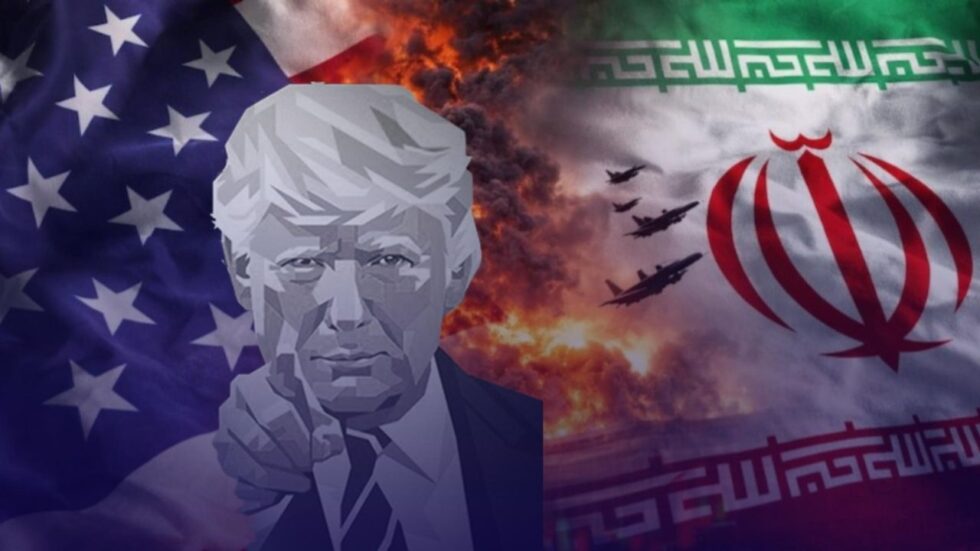


In December of 1991, the Supreme Soviet announced the end and dissolution of the Union of Soviet Socialist Republics, marking the end of an era of a bipolarity that had begun right after the Second World War. Since then, America stood essentially as the dominant superpower and global hegemon. But in the last 23 years, after the disastrous and costly “war on terror,” gradual American withdrawal, and growing alienation from traditional allies, American hegemony has become increasingly undermined. America’s latest war on Tehran has only underscored that development.
Iran: An attempt to recreate 2003?
From the start of this latest flare-up of conflict, comparisons between the current war with Iran and the 2003 invasion of Iraq have been unavoidable. In both cases, the United States justified military action through a combination of preemptive logic, security concerns, and the promise of eliminating a long-term threat. At the moment, three American aircraft carriers are now in the region, the most since 2003. Critics have pointed to familiar patterns: the reliance on intelligence claims that the public cannot fully verify, the framing of the conflict as necessary for long-term stability, and the assumption that military superiority can translate into strategic success. The one that stands out the most is fearmongering regarding the country’s nuclear program, just as the U.S. did with Iraq.
Yet the comparison is not exact—and that may be what makes the situation more dangerous. Unlike Iraq in 2003, Iran is not an isolated state with a weakened military and limited regional reach. It possesses a far more developed missile and drone program, entrenched regional networks, and a doctrine built around asymmetric warfare. With both its own forces and those of its allies experienced in modern warfare from conflicts in Iraq, Syria, Yemen, and Lebanon.
Throughout the course of the war, these differences have become increasingly evident in both the scale and intensity of the response. CSIS estimates indicate that within weeks of fighting, the United States has expended roughly a quarter of its long-range strike inventory and, in some cases, more than half of its critical air defense interceptors—while certain limited systems may have been depleted by as much as 70 percent, underscoring the pace at which high-end capabilities are being consumed.
At the same time, the systems designed to sustain U.S. defensive posture in the region have come under direct attack. A THAAD radar system in Jordan has been confirmed destroyed, while additional radar sites linked to THAAD batteries in Saudi Arabia and the United Arab Emirates have also been struck. Some reports suggest that as many as four such systems may have been taken out, though the full extent of the damage remains unclear. A recent NBC News report further indicated that U.S. military bases across the region sustained damage that was “far worse than publicly acknowledged,” with strikes hitting critical infrastructure including command centers, runways, radar systems, and aircraft.
This combination of rapid depletion of advanced munitions alongside damage to high-value defensive infrastructure underscores a broader reality: the conflict is not only exposing weaknesses of American military strength, but the limits of its sustainability under prolonged, high-intensity pressure.
With the opening phase of the war already placing significant strain on U.S. capabilities, the prospect of escalation raises even more serious questions. In the weeks following the initial strikes, officials have at times floated the possibility of broader military action, including a potential ground component. Yet, the conditions that defined earlier U.S. invasions—such as Iraq in 2003—are largely absent. Iran’s size, terrain, population, and entrenched defensive networks present a fundamentally different challenge.
More importantly, the early stages of the current conflict suggest that even limited operations are resource-intensive at a scale that is difficult to sustain. The rapid depletion of advanced munitions, combined with damage to regional infrastructure and the need to defend multiple bases across a wide geographic area, points to a military already operating under significant pressure.
At the same time, the human cost of the conflict may be far higher than publicly acknowledged. While official U.S. casualty figures fluctuate frequently, investigative reports suggest that this may reflect deliberate efforts to obscure the true scale of deaths and injuries as a result of active US concealment, raising questions about transparency and the full impact of the war.
As the “global hegemon” the United States can’t afford casualties, or at least the information about such casualties being known, as it hurts its image of being a dominant, even “omnipotent” military power. Traditionally, American withdrawals from overseas conflicts have been linked not necessarily to military success, but casualties in the long-term. Anti-war sentiments in the U.S. are often linked directly to an increasing casualty count.
Expanding the conflict into a ground campaign would not simply increase costs—it would multiply them, likely resulting in a sharp rise in U.S. casualties while placing further strain on logistics, personnel, and supply chains that are already being tested.
In this context, the question is not whether the United States possesses the capability to initiate a ground invasion, but whether it can sustain one at scale—and, even if it can, whether the long-term strategic costs would prove greater than any military success it achieves.
Global Reputation
Beyond its military and logistical implications, the war has also begun to reshape how the United States is perceived globally. For decades, American power was not only measured in its ability to project force, but in its claim to uphold a rules-based international order. That perception is now increasingly under strain.
While the origins of the conflict remain contested, recent developments have reinforced a more consistent pattern. The latest escalations have largely followed U.S. and Israeli military actions, followed by retaliation, even as intermittent calls for negotiation have continued. In several instances, Iran signaled willingness to limit or dilute its enriched uranium stockpile—an irreversible process—in exchange for sanctions relief, alongside proposals for verification and temporary suspension of enrichment. Notably, diplomatic efforts have repeatedly coincided with escalation. In both the earlier twelve-day conflict and the current war, negotiations were underway in the lead-up to hostilities, only to collapse as military strikes were launched. These diplomatic openings, therefore, have struggled to produce a lasting agreement, often unraveling amid deepening mistrust and competing demands. This recurring pattern of negotiations and subsequent military strikes that collapse negotiations seem to be a deliberate pattern pursued by the United States in order to force Iran’s hand.
At the same time, Iran’s broader military posture is viewed very differently depending on perspective. Iranian officials and some analysts argue that its missile and drone programs, as well as its support for regional allies, function as defensive measures within a regional environment where U.S. and Israeli military capabilities remain unconstrained and American bases are positioned across West Asia. This perception is reinforced by long-standing asymmetries, including Israel’s undeclared but widely assumed nuclear arsenal and its status outside key nonproliferation frameworks, alongside the United States’ own nuclear capabilities.
The United States’ close alignment with Israel has further complicated its global standing. Israel’s ongoing genocide of the Gaza Strip has drawn sustained international condemnation, fueling mass protests across major cities worldwide and intensifying scrutiny of American support for Israeli policy. As Washington continues to provide diplomatic and military backing, that criticism has increasingly extended to the United States itself, linking its global reputation to that of its closest regional ally.
This shift is not only rhetorical—it is increasingly reflected in policy. Reports indicate that some U.S. allies have restricted the use of airspace and military bases for operations related to the conflict, suggesting a level of discomfort that is unusual in past U.S.-led campaigns. In some cases, these tensions have escalated further where Washington has considered punitive measures against allied governments—such as Spain—over refusals to grant access to bases or airspace, raising broader questions about cohesion within NATO.
While not a full rupture, these developments point to a more constrained environment for American action, where even close partners are weighing the costs of alignment more carefully. The cracks in America’s long-standing alliance with European states had already begun to form when President Trump, in his first term, urged NATO states to increase their defense spending, to which many of its European allies responded negatively to and unwilling.
The president did the same in his second term, while urging EU/NATO states to increase their own support to Ukraine, so as to shift some more of the burden on Europe. The EU later demanded a “seat at the table” when negotiations between the United States and Russia occurred over settling the Ukraine war, which they felt excluded from. And now with the current conflict, in a recent press briefing German Chancellor Friedrich Merz asserted that Iran was “humiliating” the United States, claiming that it had no exit strategy for a conflict it entered itself into.
Taken together, these dynamics indicate a broader erosion of U.S. global credibility. The issue is not simply disagreement over a single conflict, but a widening gap between how the United States defines its role in the international system and how that role is increasingly perceived by others.
Economic Strain and Domestic Impact
While the geopolitical and military implications of the war are significant, its consequences are not confined to the battlefield: they are increasingly being felt within the United States. As the conflict has escalated, so too have the economic pressures associated with it, raising concerns about its long-term impact on American households and the broader economy.
One of the most immediate effects has been on energy markets. Disruptions to regional stability, particularly around critical shipping routes such as the Strait of Hormuz, have contributed to volatility in global oil prices. Even in a country that has increased its domestic energy production, the United States remains deeply connected to global markets, meaning price shocks abroad are quickly felt at home through higher fuel costs, transportation expenses, and inflationary pressure.
Beyond energy, the financial cost of sustaining the conflict is beginning to take shape. The rapid expenditure of advanced munitions—many of which require years to replace—implies not only strategic strain, but significant fiscal burden, with some estimates placing daily costs in the range of billions of dollars. Replenishing stockpiles, repairing damaged infrastructure, and maintaining an expanded military presence in the region will also require substantial government spending, adding to an already strained fiscal environment.
These pressures come at a time when many Americans are already facing economic challenges, including rising living costs and concerns over inflation. As resources are directed toward sustaining military operations, questions are likely to intensify over domestic priorities, particularly in areas such as healthcare, education, and infrastructure.
These developments suggest that the costs of the war are not limited to foreign policy, as they are increasingly being absorbed at home. The longer the conflict continues, the more likely it is that its economic consequences will become a defining feature of its legacy, shaping not only America’s position abroad, but the conditions faced by its citizens domestically.
The Limits of Hegemony
The war with Iran is not unfolding in isolation—it is taking place at a moment when the foundations of American power are already under strain. What this conflict has revealed is not a sudden collapse, but a convergence of pressures: military resources being consumed at an unsustainable pace, alliances showing signs of friction, global perception shifting, and economic costs beginning to take hold at home.
The United States remains one of, if not the most, powerful military forces in the world, but this war has begun to challenge the assumptions that underpin that power—namely, that it can be projected decisively, sustained indefinitely, and exercised without significant long-term consequences. From strained stockpiles and mounting operational demands to growing skepticism among allies and increasing domestic burden, the limits of that model are becoming more visible.
In this sense, the question is no longer simply whether the United States can win another war. It is whether it can continue to shape the global system that emerges from it. If the past two decades have raised that question, the current conflict is forcing it into sharper focus—suggesting that the defining challenge for American power may not be defeating its adversaries, but sustaining its position in a world where the costs of doing so are becoming increasingly difficult to bear.
If you value our journalism…
TMJ News is committed to remaining an independent, reader-funded news platform. A small donation from our valuable readers like you keeps us running so that we can keep our reporting open to all! We’ve launched a fundraising campaign to raise the $10,000 we need to meet our publishing costs this year, and it’d mean the world to us if you’d make a monthly or one-time donation to help. If you value what we publish and agree that our world needs alternative voices like ours in the media, please give what you can today.
Author

Related

The Bane of Empire: Sayyed Hassan Nasrallah’s Legacy Endures
September 27, 2026, marks two years since Israel unleashed over 80 tons of bunker-buster bombs…

Trump’s 600 Days of Broken Promises
At the Republican midterm convention in Dallas on September 10th, President Donald Trump offered voters…

Eight Decades of Occupation: Kashmir’s People Still Deprived of Freedom
Just days ago, India and Pakistan marked 79 years since independence: Pakistan on 14 August…