

What Gulf Repression Reveals About its Failure to Secure Sovereignty
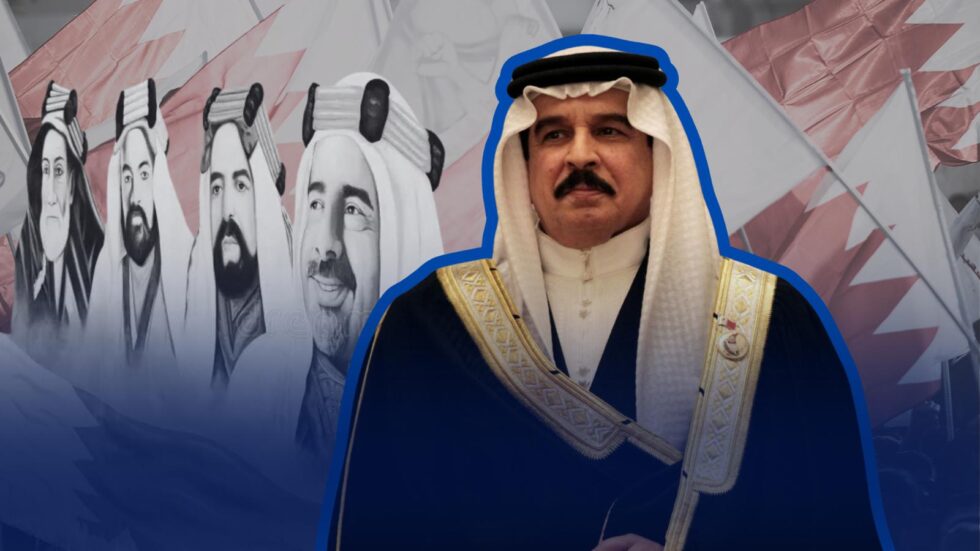


The Gulf monarchies have long claimed a moral and religious legitimacy that their political conduct increasingly calls into question. Beneath the language of stability, order, and piety lies a harder reality: dependence on external power, the containment of dissent, and the suppression of communities that refuse to disappear quietly. Bahrain is one of the clearest places where this contradiction comes into view.
Bahrain has long served as a small-scale test case of a much larger Gulf order. Its Shia majority, repeated waves of political unrest, clerical suppression, and the memory of the 2011 uprising reveal a regional model in which “stability” is maintained through coercion and external backing. The island is not a side note in the story of the Gulf monarchies; it is in fact one of the clearest places where their logic becomes visible.
The deeper question raised by Bahrain is not simply political, but both moral and theological. What does it mean when a state presents itself as a guardian of order while criminalizing dissent, disciplining clerical authority, and relying on foreign military protection to preserve its rule? In Islamic terms, this is not a minor contradiction. It goes to the heart of legitimacy itself.
Islam and the Ethics of Resistance
Islam is often reduced in public discourse to private piety, ritual, or cultural identity. But that reduction erases the tradition’s political and ethical depth. At its core, Islam is not passive before oppression. It contains a clear moral vocabulary for naming injustice, refusing humiliation, and drawing boundaries against aggressors. The Qur’anic worldview does not ask believers to treat domination as normal; it frames the world as a struggle between truth and falsehood, justice and tyranny.
This is why resistance in Islam is not an optional aesthetic, but part of the moral structure of the tradition. That does not mean reckless confrontation, and it does not mean every act of opposition is automatically righteous. It means, more fundamentally, that there are red lines. A political order that asks Muslims to accept humiliation in the name of stability is asking them to surrender one of the most basic principles of the tradition: that injustice must be answered, not sanctified.
Karbala as Political Memory
That moral structure becomes clearest in Karbala. Imam Hussain’s stand was not a quest for victory at any cost, nor a celebration of martyrdom for its own sake. It was a refusal to legitimize a corrupt order whose authority had become detached from justice. He did not rise because the odds were favorable. He rose because silence would have meant accepting the falsehood of a regime that demanded submission without moral right.
Karbala remains more than a devotional memory. It is a political standard. It teaches that legitimacy is not the same as force, that survival is not the same as righteousness, and that there are moments when refusal itself becomes the highest form of fidelity. For Shia communities in particular, this is not abstract symbolism but the grammar through which power is judged.
When Bahrain’s Shia population has faced political exclusion, clerical pressure, arrests, and repeated efforts to contain dissent, the relevance of Karbala is not rhetorical. It is immediate. The memory of principled defiance speaks directly to a present in which moral authority is treated as a threat.
The 2011 Uprising and Its Aftermath
The 2011 uprising in Bahrain made the Gulf’s political logic impossible to ignore. What began as a broad protest movement demanding reform was met with a severe state response, including the intervention of Gulf forces under Saudi leadership. The arrival of outside military support signaled something important: the survival of the Bahraini monarchy was not being secured solely by domestic legitimacy, but by regional force designed to preserve the existing order.
That intervention mattered because it showed how tightly the Bahraini regime is bound to the broader Gulf security architecture. It also exposed the limits of the official language of reform. Demands for participation, representation, and equal citizenship were not met with serious political accommodation; they were met with repression, arrests, and a narrowing of the space in which Shia religious and political life could operate.
The effects of that response did not end in 2011. They shaped the subsequent years of clerical restriction, citizenship revocation, and political marginalization that followed.
Clerical Suppression in Bahrain
Bahrain’s clerical question is central to understanding the island’s crisis. In 2016, the state revoked the citizenship of Ayatollah Sheikh Isa Qassim, the senior Shia cleric widely regarded as a major religious authority. International reporting described the move as a dramatic escalation in the confrontation between the monarchy and the Shia opposition. Human rights groups and UN experts also warned that Bahrain’s treatment of Shia figures and institutions reflected a broader pattern of persecution and restriction.
These are not isolated episodes. They are part of a political method. When religious authority begins to articulate dissent, the state does not merely disagree with it; it seeks to contain it, criminalize it, or strip it of social weight. In Bahrain, that pattern has had a particular sectarian shape because the country’s political structure has long treated independent Shia mobilization as a threat to be managed rather than a constituency to be represented.
That pattern has continued in recent years. In May 2026, multiple outlets reported that Bahraini authorities arrested more than 40 Shia clerics and scholars in a new crackdown linked to accusations of sympathy with Iran during the war on Iran. These clerics were not simply “religious figures” in a narrow sense: they were scholars, mosque leaders, and community authorities who play a major role in public moral life and in organizing Shia religious spaces. Human rights groups warned that the arrests set a dangerous precedent by criminalizing religious expression and political solidarity.
The case of Sayed Mohammad al-Mousawi made the same pattern even clearer. He was reported to be a Bahraini citizen arrested in March 2026 in connection with his pro-Iran stance during the war, and he died in custody shortly afterward. Euro-Med Monitor said the body showed signs signs of torture and urged an independent investigation, He was described as a Shia activist, showing that the crackdown was not limited to formal clerics but extended to politically active members of the Shia community more broadly.
The repression has since widened further. In early June 2026, Bahrain banned citizens from traveling to Iraq and Iran ahead of Ashura and the Muharram pilgrimage season, a move widely seen as directly affecting Bahraini Shia seeking to visit Karbala and other holy sites. Critics argued that the ban did not merely regulate travel under security pretexts, but effectively curtailed freedom of movement and religious practice for the country’s Shia majority during one of the most important periods in the Shia calendar. Reports around the same period also described additional arrests of Shia scholars, eulogists, and religious figures, suggesting that the campaign was expanding beyond an initial wave of detentions into a broader effort to discipline the religious sphere itself.
That is why Bahrain cannot be discussed honestly without naming the clerical dimension. The restriction of prayer spaces, the disciplining of religious speech, the punishment of leading figures, and the broader pressure on Shia civic life all point to a regime that understands religious authority as a political problem.
The Gulf Security Order
Bahrain also reveals something broader about the Gulf monarchies as a whole: their security architecture is deeply dependent on the United States. U.S. military installations across the region have long been presented as the foundation of deterrence and protection. But more recent analysis has emphasized that this footprint has increasingly become a liability, turning major bases into exposure points in a region defined by escalation and retaliation.
That matters because the promise of protection and the reality of vulnerability are not the same thing. The logic of the U.S.-Gulf alliance has been that foreign military power can stabilize local rule. But the more visible that relationship becomes, the more it transforms the host states into part of a wider conflict system. The result is a paradox: the alliance meant to shield the Gulf from danger may also heighten the danger around it.
This is the central weakness of the Gulf model. It confuses external patronage with sovereignty. A state may be heavily armed and diplomatically connected, yet still be structurally dependent and politically fragile. Protected, but not secure. Powerful on paper, but exposed in reality.
What the UAE Reveals
The United Arab Emirates is perhaps the clearest example of this logic taken to its most deliberate form. Abu Dhabi has increasingly positioned itself as a reliable partner inside a U.S.-led regional order, not merely as a beneficiary of protection but as an active participant in shaping the political environment around it. That includes the recent reported $100 million pledge tied to Trump’s “Board of Peace” initiative for Gaza, which underscores the emirate’s willingness to invest in U.S.-centered regional arrangements.
This should not be read simply as a donation. It is a signal of alignment. The UAE is not behaving like a state keeping strategic distance from imperial projects; it is behaving like a state that sees advantage in underwriting them. In return, it gains access, influence, and status. But the political cost is clear: the deeper the alignment, the less room there is for an independent moral or strategic posture.
That is why the UAE stands as a useful contrast to the rhetoric of Arab sovereignty. It represents a model in which regional power is pursued not through autonomy, but through integration into a system of external control.
The Language of Stability
One of the most effective tools of the Gulf order is the language of stability. It is used to describe a political arrangement that suppresses opposition, narrows public life, and criminalizes independent authority. Stability, in this vocabulary, means the continuity of the ruling structure rather than the justice of the society.
But that language is increasingly difficult to sustain. The Gulf’s own security dependence, the exposure of U.S. bases, the fragility of alliances, and the continuing repression of Shia communities all reveal the hidden cost of this arrangement. Stability built on coercion is not stability in any meaningful Islamic sense. It is managed silence.
That silence is particularly visible in Bahrain, where the state’s response to dissent has repeatedly framed resistance as disorder. Yet the moral weight of the Bahraini Shia experience tells another story. What appears as unrest from the perspective of the ruling order often looks, from below, like a demand for dignity.
Islam Against Humiliation
This is where the larger Islamic argument returns. Islam does not teach Muslims to romanticize violence, but neither does it ask them to accept humiliation as the price of peace. The Prophetic tradition and the memory of the Imams establish a different standard: one in which justice is not optional, and truth cannot be surrendered to preserve the comfort of rulers.
That standard is especially relevant today because the Gulf monarchies have often sought to present alignment with great power as prudence and dissent as irresponsibility. But when rulers define legitimacy through foreign patronage, and when they treat Shia political life as something to be controlled rather than respected, they move further away from the ethic that Islam itself demands.
In that sense, the Bahraini case is not only about Bahrain. It is about a region in which political elites have tried to turn dependence into doctrine and coercion into order. Karbala stands against that logic. So do the lived experiences of Shia communities who have been asked, generation after generation, to accept marginalization in exchange for silence.
A Regional Reckoning
For years, critics of anti-hegemonic resistance were told that no regional order could exist outside American control. That assumption is now under strain. The region has learned, repeatedly, that protection purchased through subordination is not true security. It is deferred crisis.
The Gulf monarchies remain powerful, wealthy, and deeply embedded in international systems. But their legitimacy is not secure if it depends on external coercion and internal exclusion. Bahrain shows this with particular clarity: the suppression of clerics, the narrowing of Shia civic space, the Saudi-linked intervention, and the persistence of political exclusion all reveal a state order trying to survive by managing contradiction rather than resolving it.
And that is ultimately the problem with the Gulf model. It asks Muslims to confuse order with justice, and survival with legitimacy. Islam’s ethical memory, especially through Karbala, refuses that confusion. It insists that power is accountable, that aggression has boundaries, and that dignity is not negotiable.
If you value our journalism…
TMJ News is committed to remaining an independent, reader-funded news platform. A small donation from our valuable readers like you keeps us running so that we can keep our reporting open to all! We’ve launched a fundraising campaign to raise the $10,000 we need to meet our publishing costs this year, and it’d mean the world to us if you’d make a monthly or one-time donation to help. If you value what we publish and agree that our world needs alternative voices like ours in the media, please give what you can today.
Author

Related
Eight Decades of Occupation: Kashmir’s People Still Deprived of Freedom
Just days ago, India and Pakistan marked 79 years since independence: Pakistan on 14 August…

Can the Arab Speak?
A 40-year old Taxi driver in Egypt drives all day and night to make ends…
The United States Used a Precision Missile in Lamerd, Iran, and Killed 21 Civilians within Seconds
The events that unfolded in the Iranian city of Lamerd on February 28, 2026, stand as a stark example of how the debut of a new weapon system can leave lasting scars on a community long after the explosions have faded.